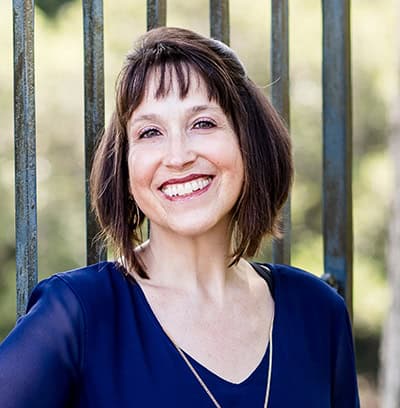


Adrienne Skinner’s journey began with vigilance — years of regular screenings after learning she had Lynch syndrome — yet still led to a devastating stage 4 ampullary cancer diagnosis. After chemotherapy failed, genetic testing opened the door to an immunotherapy clinical trial that ultimately saved her life. More than a decade later, Adrienne remains cancer-free, living fully and giving back in gratitude for the research that changed her future.
Facing a Stage 4 Diagnosis
Adrienne Skinner learned in 2005 that she had Lynch syndrome, a hereditary genetic disorder that significantly increased her risk for multiple types of cancer. Armed with this knowledge, Adrienne went in for regular screenings and took every step meant to catch cancer early.
Despite her diligence, Adrienne was diagnosed in February 2013 with ampullary cancer, a rare cancer with limited treatment options. Doctors believe the cancer had likely been growing in her body for nearly two years.
She was referred for the very invasive Whipple surgery to remove the tumor in her ampulla. But once surgery was underway, her surgeon discovered that the cancer had already spread to her liver. The operation was halted, and she awoke to devastating news: stage 4 metastatic ampullary cancer.
“When I came to, they said it’s not going to be treatable with surgery.”
Instead, Adrienne began chemotherapy immediately. Still recovering from the halted Whipple surgery, the treatment wreaked havoc on her body. She had never been sicker — unable even to take a sip of water.
Over the course of the next year, Adrienne endured three different chemotherapy regimens. Each would work for a short time, then stop. The process would repeat.
Nothing was working for her cancer.
Persistence That Paid Off
While Adrienne was undergoing chemotherapy, her oncologist genetically tested her tumor and discovered it was Microsatellite Instability-High (MSI-H), a marker of DNA instability. That finding opened the door to a clinical trial—and potentially to the treatment that would save her life.
Enrolling in the trial took persistence and allowed Adrienne to use her well-honed skills. Doctors were unsure whether Adrienne met the criteria to participate.

I literally feel like I pitched them to get into the trial. My pitch was, I’m coming to you pretty much in great health, except for this cancer that will likely kill me.
A few days later, Adrienne received a call: if she could get to Johns Hopkins the next day, they would treat her.
She didn’t hesitate, hopping on a train to Baltimore the very next day.
Adrienne began treatment with the immunotherapy drug KeytrudaⓇ (pembrolizumab) on April 15, 2014. Just three months later, in July 2014, she underwent a biopsy.
“The surgeon looks at me, and he said, ‘If somebody hadn’t told me you had ampullary cancer, I wouldn’t have known. There’s just nothing there.’”
Adrienne continued treatment for the duration of the clinical trial, until April 2016, and over a decade later has remained cancer-free since July 2014.
Because of her Lynch syndrome, she will “be tested out the wazoo” for the rest of her life — but she makes the most of it.
Want to help change lives through cancer immunotherapy?
Gratefulness and Giving Back
In the time she’s been given, Adrienne fills her life fully. She spends time with family and friends, plays tennis, practices yoga, travels, and embraces new hobbies like gardening and cooking.
“I’ve just been living.”
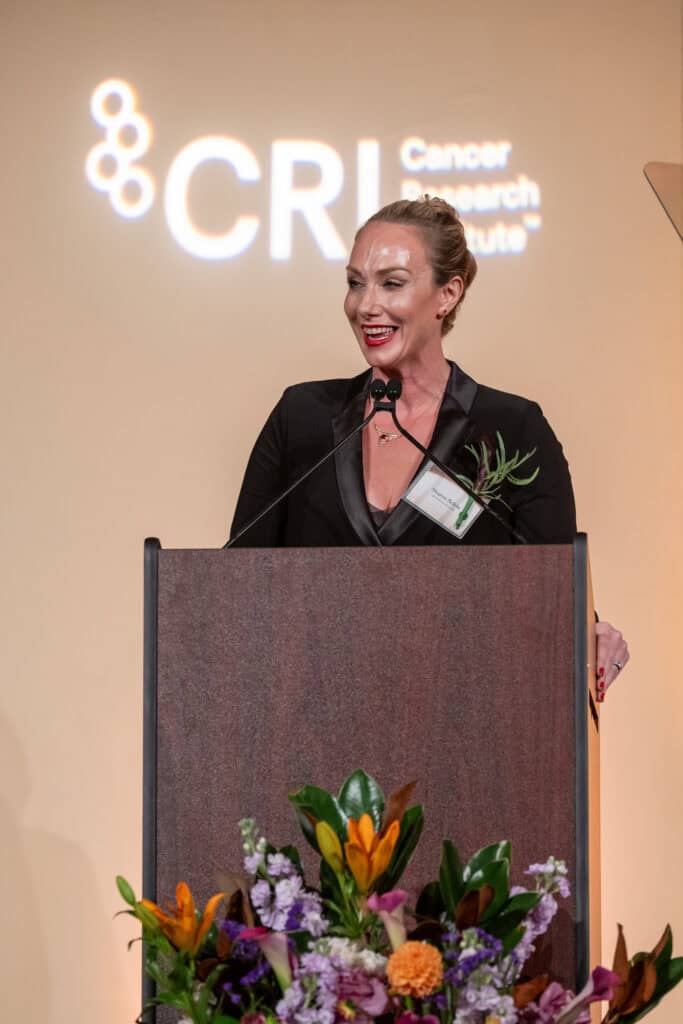
Adrienne gives back however she can and is deeply grateful for the organizations and research that support clinical trials like the one that saved her life. She has spoken at fundraising events like Swim Across America and CRI’s Wear White Luncheon, as well as participated in patient summits.
She reflects on her experience with perspective, recognizing that not undergoing the Whipple surgery ultimately led her to that trial. Without it, she believes she would not have survived another six months.
“Sometimes the smallest occurrence, something that doesn’t seem very significant, can turn out to be everything.”
Questions and Answers
How and when did you first learn you had cancer?
My cancer was diagnosed in February 2013. I knew I had Lynch Syndrome, and went for annual colonoscopies and endoscopies. However, when I went for blood work for a scheduled colonoscopy on February 13th, my doctor told me my liver enzymes were off the charts and I needed an MRI. From there, it was quickly determined there was a tumor in my ampulla, and surgery was scheduled for Feb. 26th. However, during surgery they discovered it had spread to my liver. I started chemotherapy two weeks after surgery and did that for 13 months. It didn’t work.
How did you learn about immunotherapy and why did you decide to do it?
My doctor (Dr. Eileen O’Reilly at MSK) tried three different chemo concoctions, all of which didn’t work. She found the clinical trial at Johns Hopkins testing whether Keytruda would work for patients with MSI-High mutations in their tumors. She felt this was my best option, since we knew through the biopsy done during my surgery that I did indeed have MSI-High mutations.
What was treatment like? Did you have any side effects?
Other than having to travel to Johns Hopkins (Baltimore) from NY every two weeks, it was easy and simple. No side effects. My hair grew back, all chemo-related side effects disappeared, and I continued to live my life normally (worked full time, played tennis, yoga, gardening, etc.). More importantly, the immunotherapy treatment worked right away. After only three months, the tumor was gone. I continued treatment for the full two years as a kind of ‘insurance’ since my Lynch Syndrome causes high incidence of numerous cancers and Dr. O’Reilly felt that was prudent.
How did immunotherapy compare to other treatments you may have received, if any?
First and foremost, it worked! Not only did it mean I did not have to get the Whipple (surgery to remove cancers like mine), it meant my system was essentially preserved and my body was fully functioning without any compromises. I was honored to be part of the news coverage about the FDA’s approval of Keytruda for treatment of MSI-High identified cancers, the first drug approved for non-location specific cancer treatment.
Are there things that surprise you about the cancer experience?
I knew about my condition with Lynch Syndrome for ten years prior to my diagnosis, so one surprise is that the cancer was not caught earlier. The surgeon said it had been in my system for two years prior to discovery.
I am blessed with an amazing support network of family and friends who stewarded me through the experience in ways I had no idea were needed. You never really know how you will deal with a challenge until you are faced with it, so another surprise was how much I needed to help my family and friends deal with my diagnosis. They felt so helpless, and it hurt to watch their pain. I blogged about the process I was going through and kept to my work schedule and other facets of my life as much as I could, which helped them see I was ok.
I am blessed with an amazing support network of family and friends who stewarded me through the experience in ways I had no idea were needed. You never really know how you will deal with a challenge until you are faced with it, so another surprise was how much I needed to help my family and friends deal with my diagnosis. They felt so helpless, and it hurt to watch their pain. I blogged about the process I was going through and kept to my work schedule and other facets of my life as much as I could, which helped them see I was ok.
What would you want another patient to know about immunotherapy or about participating in a clinical trial?
We are blessed to live in a time where this amazing treatment is now a reality. Thank goodness for the perseverance of so many people, including Dr. William Coley, his daughter Helen Coley Nauts, Dr. Lloyd Old and countless others, both in the medical field and those supporting it.
Immunotherapy results continue to break new records. The basic premise is to enable our own bodies to fight our cancers, by helping to activate our immune systems. I believe immunotherapy is the future of medical treatment for cancer and encourage anyone facing the devastating news of a cancer diagnosis to consider this treatment and discuss it with your medical team. Why not? You want to use every tool you can to beat this pernicious disease and lead the life you want.
Know that we each have an opportunity to help improve cancer treatments by participating in trials, where appropriate, and supporting the work done to bring immunotherapy into active use for every cancer patient.