
I have outlived my original prognosis. I have outlived my second prognosis. And I am not looking back.
After surgery, chemotherapy, and radiation for a rare liver cancer, Molly Hones learned that the disease had spread to her lungs. In her early 30s, she was preparing for the end of her life when a clinical trial offered a new possibility: an experimental cancer vaccine combined with checkpoint inhibitor immunotherapy. Today, more than two years into complete remission, she is sharing her story in gratitude for the research that reached her – and in hope for the people who come next.
A Life Full of Adventure
Looking back at photographs from 2022, Molly Hones sees a year full of adventures. There she is on a sand dune outside Dubai. Swimming in the ocean near Tampa. Visiting Disney World with her mother and sister.
At home in Madison, Wisconsin, she and her husband, Grant, enjoyed camping and spending time with their dog. She had celebrated her 30th birthday in Las Vegas and was looking forward to the years ahead.
What she couldn’t see in those photographs was the large tumor growing in her liver.
In December 2022, Molly went to the emergency room after an ovarian cyst ruptured. An ultrasound to check for internal bleeding revealed something unexpected: a sizable liver lesion.
Further scans led to surgery in June 2023. Doctors removed the tumor, and testing identified fibrolamellar carcinoma, a rare liver cancer that typically affects adolescents and young adults who are otherwise healthy.
Preparing for an Uncertain Future
Cancer had long been part of Molly’s life. Both of her grandfathers had died from the disease. A childhood classmate, also named Molly, had died of leukemia before reaching first grade. Her mother had been diagnosed with cancer in 2016, and her father received a bladder cancer diagnosis just weeks after her own diagnosis.
But the rarity of her cancer brought a different kind of uncertainty. When Molly searched for information, she found limited research and few established treatment options.
After surgery, she underwent more than 35 rounds of radiation along with oral chemotherapy, completing treatment in September 2023. The side effects made her think carefully about what she wanted from any future treatment, as quality of life mattered deeply to her.
In April 2024, scans showed four nodules in her lungs. Her cancer had returned and spread.
Molly began preparing for the possibility that her life would be short. She picked out a silver floor-length gown for her funeral. Near her family’s property, she hiked to a creek where yellow flowers bloomed in spring and recorded the GPS coordinates of the place she wanted her ashes scattered.
“I knew that I wanted to be brave,” she says. “I knew that I wanted to live life in Technicolor.”
A New Possibility at Johns Hopkins
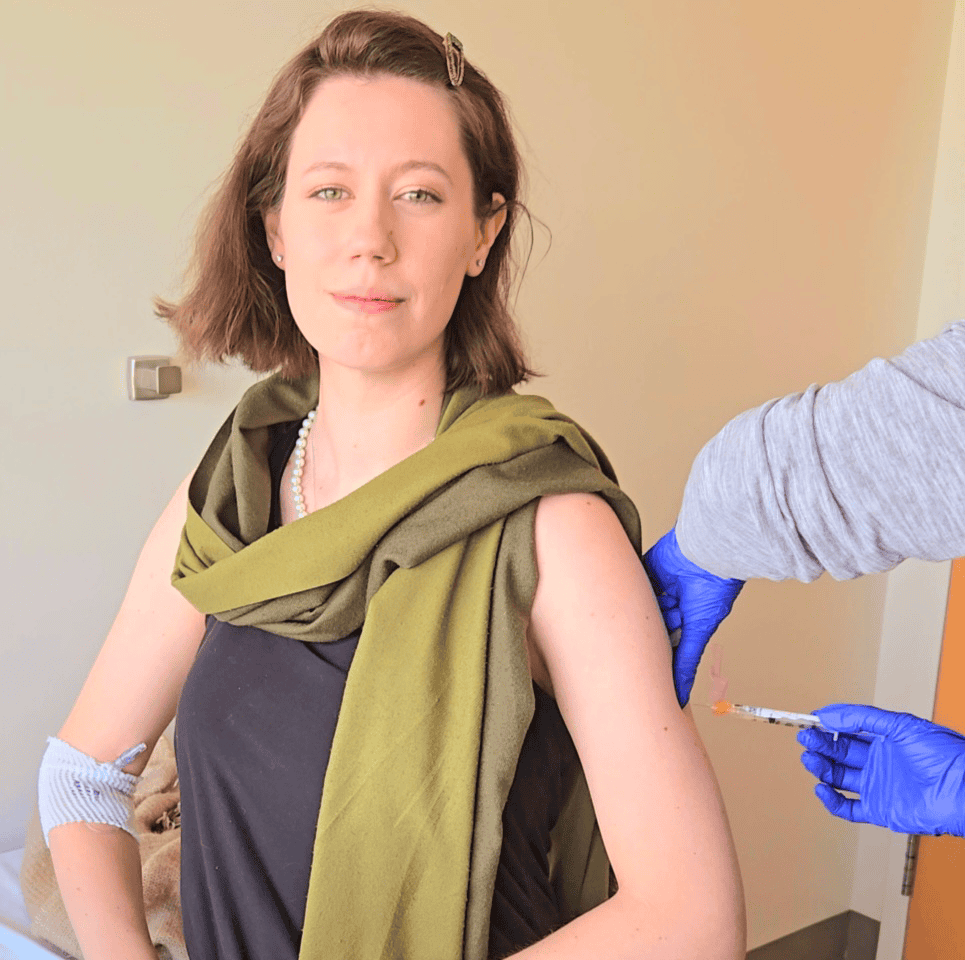
While Molly was at work, she received a call from Marina Baretti, MD, at Johns Hopkins. She was eligible for a clinical trial testing an experimental cancer vaccine in combination with two checkpoint inhibitors, nivolumab (Opdivo®) and ipilimumab (Yervoy®).
The vaccine was designed to help immune cells recognize an abnormal protein found in fibrolamellar cancer cells. The checkpoint inhibitors would help remove the brakes on the immune system, allowing it to respond more effectively. Together, the treatments aimed to help her immune system recognize and attack the cancer.
“Her immune system has learned to recognize the cancer,” Dr. Baretti said. “We are not just treating the cancer that we see, but we are really trying to teach the immune system to recognize and to treat also the cancer that we don’t see.”
Molly had always loved outer space. As she considered joining the trial, she remembered thinking that more people had been to the International Space Station than had received this vaccine. She wanted to approach the unknown with the same courage she admired in astronauts.
This would be her moonshot.
She and Grant drove from Wisconsin to Baltimore, taking in the mountains along the way. On May 30, 2024, she received her first vaccine injection.
“I didn’t know if the vaccine would work, but I figured what researchers learned from me would at least help someone who came after me,” Molly says.
Finding a Way to Keep Living
Just two weeks after Molly began treatment, Grant died unexpectedly of a brain aneurysm. He was 44.
While facing her own uncertain future, she was suddenly grieving her husband.
“All those funeral arrangements that I had arranged for myself ended up becoming a part of his,” she says.
Molly continued treatment while carrying that loss. She held on to a phrase Grant loved: “You just gotta keep living.”
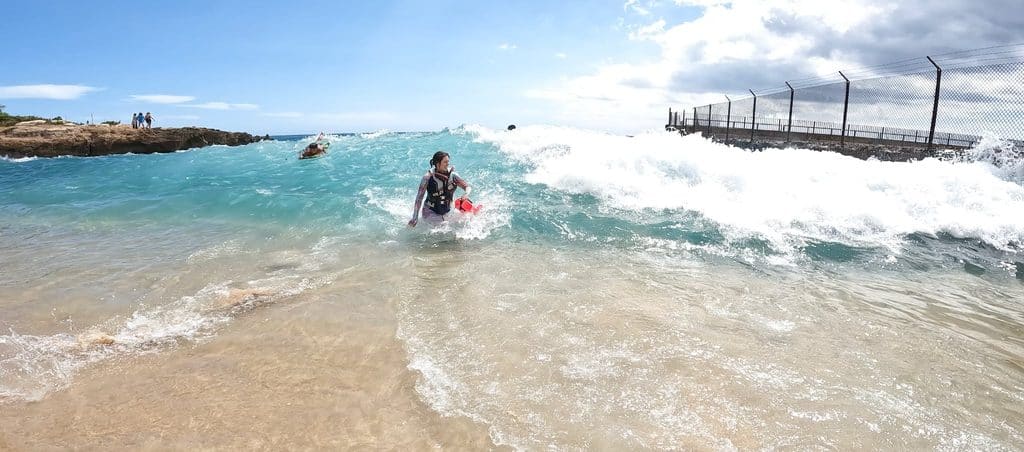
She went to the shores of Hawaii and the bustling streets of Vietnam. Having prepared for brutal and debilitating side effects from treatment, she was shocked that she felt well enough to live her life.
She was able to keep doing things she loved while receiving treatment. For someone who had thought so carefully about how she wanted to spend her remaining time, that mattered.
The Scan That Changed Her Future
On September 17, 2024, 110 days after her first vaccine injection, scans showed that the four cancerous nodules in Molly’s lungs had disappeared.
She achieved complete remission.
In September 2026, Molly celebrated two years of complete remission.
“It’s 35 years of working on basic immunology and biology, developing ways in preclinical models, testing in patients,” said Elizabeth Jaffee, MD, of Johns Hopkins and Associate Director of CRI’s Scientific Advisory Council. “Thirty-five years of progress to get to where we want to be, not seeing what we really wanted to see: some real clinical outcomes that are durable, and all of a sudden we’re there.”
Thinking of the Next Person
At CRI’s 2026 Annual Awards Gala, Molly shared her story with the survivors, scientists, and supporters gathered in the room. CRI has supported Dr. Baretti’s research into new immunotherapy approaches for fibrolamellar carcinoma, a connection that made the evening especially meaningful to her.
“When I joined the trial, I thought I was doing it for the person who would come after me,” she said. “Now I understand that people before me had already done that for me.”
Molly thinks about the people who are living their lives today with no idea they may one day need the research already underway. She wants them to have the chance she had.
“I got my moonshot,” she said. “Let’s make sure the next person gets theirs too.”