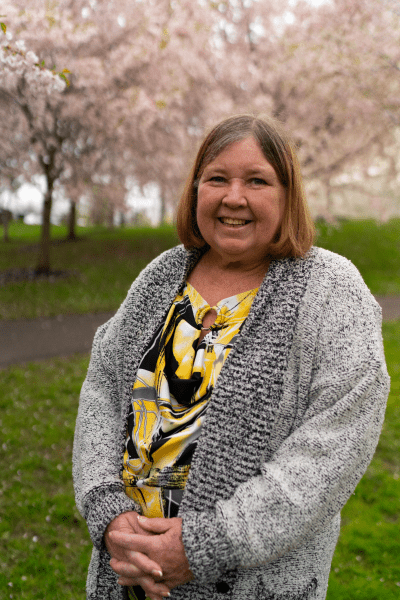


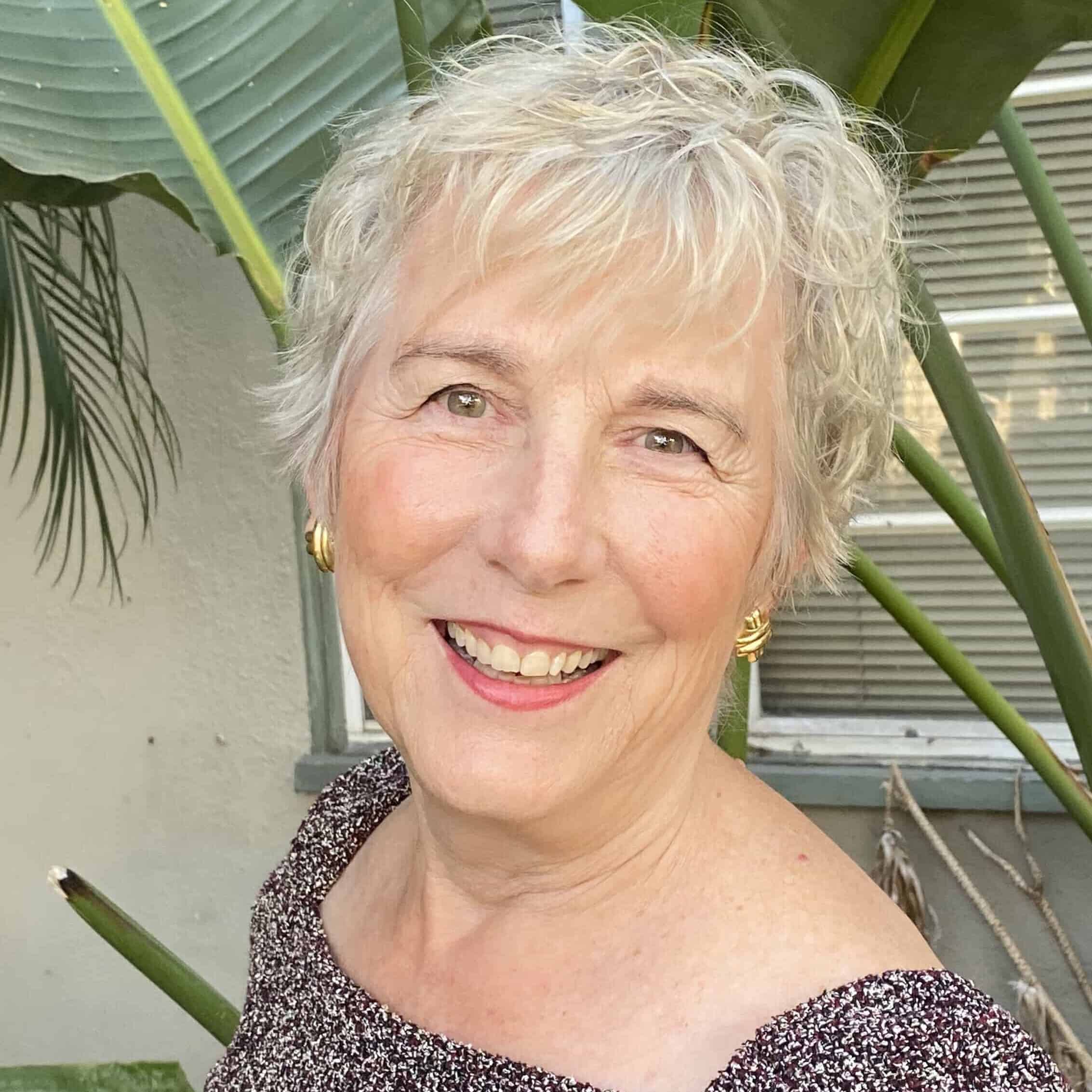
When Peggy Zuckerman was finally diagnosed with stage 4 kidney cancer, she refused to let confusion and silence define her experience. After immunotherapy eliminated her tumors, she found a new purpose: helping other patients understand their disease and speak up for themselves. More than 20 years later, she remains cancer-free and committed to empowering others.
Facing a Stage 4 Diagnosis
During an ultrasound meant to provide yet another answer in nine frustrating months of tests, the technician quietly turned the screen away from Peggy Zuckerman.
She knew something was wrong.
Within hours, she was undergoing a CT scan. From the exam table, she could see members of the medical team gathered behind a glass wall, their expressions tense.
“Silence descended, and I could not get answers to any questions,” Peggy recalls.
The diagnosis that followed was devastating: stage 4 metastatic renal cell carcinoma (RCC), the most common type of kidney cancer. A tumor nearly four inches wide — about the size of a softball — filled her kidney. The cancer had already spread to her lungs.
Months Spent on Misdiagnoses
As a former teacher, mother of five, and business owner, Peggy was used to juggling responsibilities. In 2003, routine blood work revealed severe anemia. After her doctor suggested a stomach ulcer, her symptoms — weight loss, fatigue, night sweats — were attributed to everything from menopause to stress to alcoholism, a diagnosis that did not apply to her.
She followed every recommendation. Still, her health continued to decline. It even turned out that the ulcer she was diagnosed with was never actually there. This misdiagnosis was one of many that kept Peggy’s cancer from being detected and treated earlier.
So she found a new doctor.
This time, there was a plan.
A Critical Decision
Peggy underwent surgery to remove her kidney. Once she recovered, she faced a pivotal choice: enroll in a clinical trial for a targeted therapy or begin immunotherapy. If she started immunotherapy first, she would be ineligible for the trial.
Hoping the experimental therapy might stop the cancer with fewer side effects, she chose the clinical trial.
For eight weeks, she received injections. Life began to feel almost normal again.
But follow-up scans revealed the tumors were still growing.
It was time for her second option.
Moving to Immunotherapy
Peggy began treatment with interleukin-2 (IL-2), a powerful immune-based therapy designed to stimulate the body’s own defenses to attack cancer. Because of its intensity and potentially serious side effects, IL-2 is reserved for specific cancers, including advanced kidney cancer.
The treatment was grueling.
“I do not remember much of the first week at all,” Peggy says. “It was mostly reported to me by my family and friends. I was obviously quite sick. You have a reaction as if you have a very tough flu.”
Midway through treatment, scans showed her tumors were shrinking.
Six weeks after her final dose, the tumors in her lungs were disappearing.
Five months later, there was no evidence of disease.

My doctor told me I was cured.
More than two decades later, Peggy remains cancer-free.
Turning Teaching Into Advocacy
About six weeks after her surgery, Peggy attended a kidney cancer patient seminar. The science was complex. The terminology was overwhelming. When the oncologist finished speaking and left the room, someone turned to the group and asked, “Did anybody understand any of this?”
Peggy smiled.“I am a schoolteacher,” she says. “I figured I could help translate what we had just heard, given a bit of time and a dictionary.”
That conversation sparked the creation of a support group — and a new calling. Peggy became determined to help other patients understand their diagnoses, their treatment options, and the promise of immunotherapy.
She encourages patients to ask questions — and to seek second opinions if needed.
“When you hear you have cancer, your brain goes to mush,” Peggy says. “Then you are asked to be part of the decision-making team for your treatment. Another patient who has had a similar experience and can explain what it means to manage immune side effects or recover from surgery — that can be invaluable.”
Peggy knows firsthand how overwhelming a cancer diagnosis can be. She also knows what is possible when patients are informed and empowered.
Once left in silence during a life-changing scan, she now helps others find their voice and approach their diagnosis with as much information as possible.