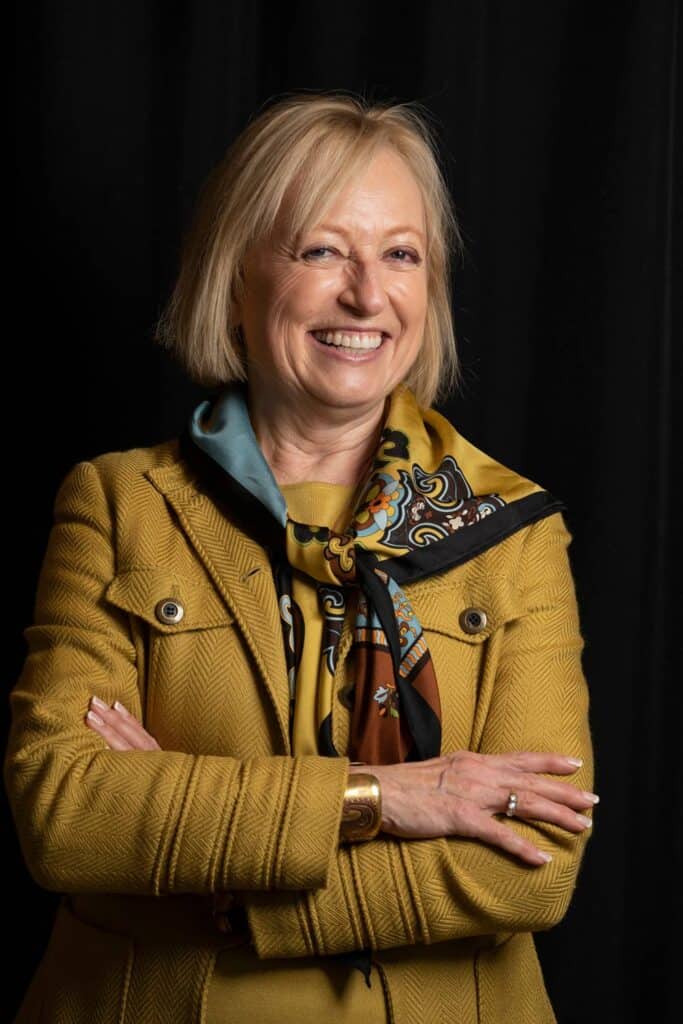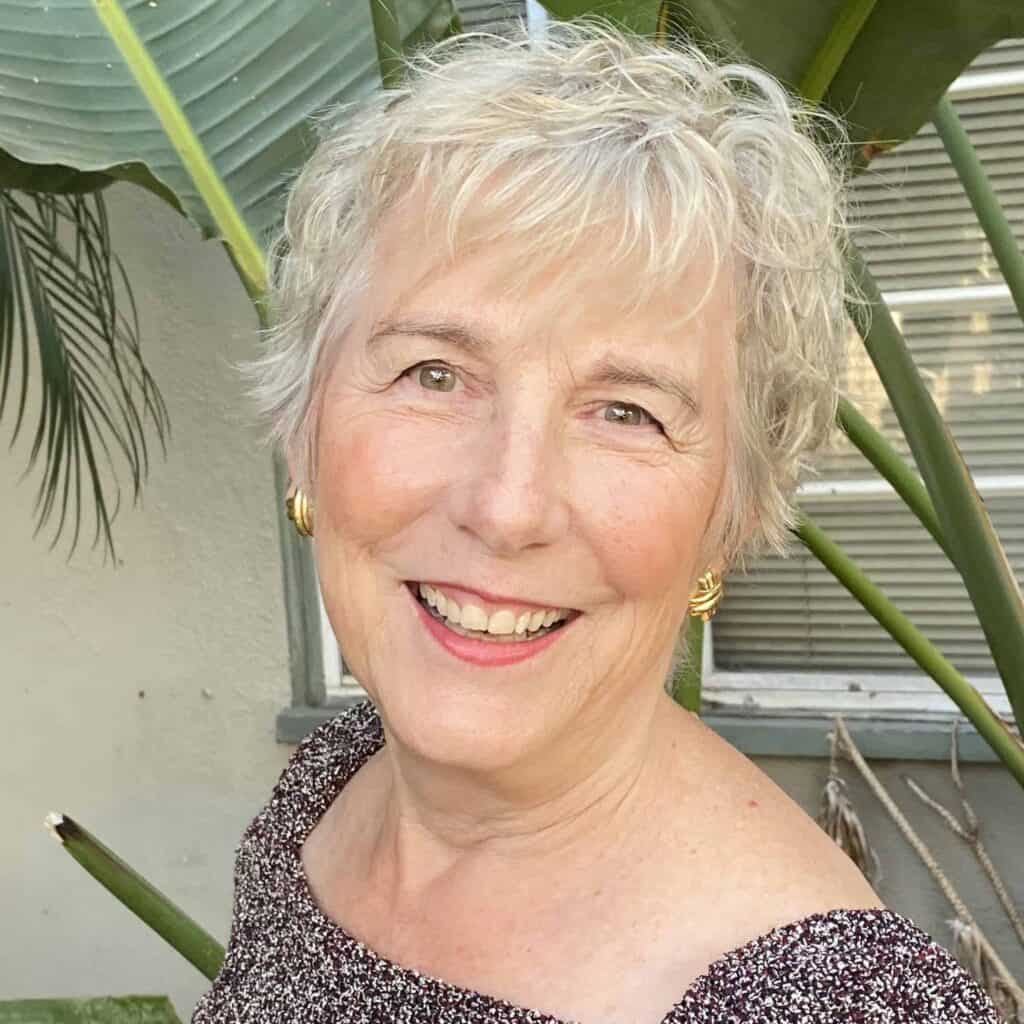



After a stage 4 esophageal cancer diagnosis, Dana Deighton refused to accept the limits placed on her care. Faced with uncertainty and discouraging odds, she pushed for answers when no clear path forward existed. Her persistence led her to an emerging immunotherapy treatment that changed everything. Today, she is free of disease — and spends her time helping others find their silver linings and their voice.
A Mysterious Illness
Dana Deighton was not someone who slowed down easily. As a mom of three, a wife, and a marketing and membership director at National Geographic, she was constantly in motion — balancing work, family, and an active lifestyle.
So when she began feeling extremely unwell, she knew something wasn’t right.
In 2012, Dana woke up one day with searing joint pain. Soon after, she learned she had lupus — a diagnosis that both confused and devastated her.

“That didn’t really fit into my active mom, full-time employee lifestyle,” she recalls. “I didn’t have time to slow down.”
With treatment, Dana was able to return to her full-throttle life – but not for long.
Another wave of vague, unexplained symptoms followed. One of them – persistent pain in her torso – put her on high alert. Her mother had passed away from colon cancer, so Dana had undergone regular colonoscopies from a young age. They had always been clear.
Confident it wasn’t colon cancer, her doctor diagnosed her with a chronic digestive condition.
But this time, the medication didn’t work. Dana was left feeling unwell, frustrated, and without answers.
“I was having trouble finding doctors who really even knew where to start,” she says.
Discovering the Truth
Everything shifted when Dana felt a lump in her cervical lymph node and returned to her doctor. A biopsy suggested malignancy, but the markers were too nonspecific to determine its origin.
“That precipitated a whole diagnostic journey of looking at every cancer you can think of for a 42-year-old woman,” she says.
Still, there were no clear answers.
“It was a fragile, scary time, and I didn’t even have the bad news yet,” she remembers. “I just knew that being chronically ill was awful.”
A lymph node excision finally confirmed it: Dana had cancer. But even then, doctors couldn’t identify the primary site. The ambiguous markers made it difficult to determine how to treat it.
For Dana, that uncertainty was especially frightening. While any cancer diagnosis is devastating, having a known cancer typically means having a treatment strategy. Cancer of unknown origin – or multiple origins – can leave doctors without a clear target.
Determined to find answers, Dana saw specialist after specialist.
Finally, an upper endoscopy revealed the source: esophageal cancer.
A Stage Four Diagnosis – and Refusing to Give Up
Even the team that performed her endoscopy had never seen a case like Dana’s. Further evaluation revealed that her tumors were metastases from the esophageal cancer, making it a stage 4 diagnosis.
She describes the experience and the waiting period as like pulling on a thread. “The more I learned about it, the more awful it got,” Dana recalls.
Doctors were not optimistic.
The oncologist said, ‘You need to get on chemo — and you need to get your affairs in order.’
But Dana wasn’t ready to do that.
After initially being denied chemotherapy due to insurance issues, she stood her ground.
“I told them, ‘Figure it out.’”
Her determination was shaped, in part, by her mother’s experience. After being diagnosed with stage 4 colon cancer, her mother lived only six weeks.
“There were really uncomfortable, unimaginable horrors in those six weeks,” Dana says. “I wish I had known then what I know now, maybe I would have asked different questions, and maybe that would have changed the trajectory.”
Eventually, and at her doctor’s behest, Dana began a chemotherapy regimen that is more common in Europe than in the United States. Through it all, she continued working full-time and caring for her family. It was exhausting — but she was determined.
The treatment worked. Her tumors began to shrink.
She was ready for the next step: potentially curative radiation and surgery.
But no one was willing to offer it.
Doctors focused on preserving her quality of life — not curing her disease.
That wasn’t enough for Dana.
The Call that Changed Everything
After insisting on a PET scan, Dana began seeking opinions from institutions across the country. Again and again, she was turned away. Some even called her “crazy” for pursuing aggressive treatment.
“I was like, I’m outside running, cutting the grass — how can you tell me I’m not healthy enough?” she says.
Then, everything changed.
A friend connected her with a renowned specialist, who called Dana immediately.
Finally, I had all this hope.
Dana underwent an intensive course of chemoradiation. She tolerated it well — and achieved a level of tumor reduction that exceeded expectations.
Once again, she pushed forward.
Despite skepticism, she was referred to a surgeon.
“The first words out of the surgeon’s mouth were, ‘We really shouldn’t be having this conversation, but let’s go ahead and talk,’” Dana recalls.
After a thorough evaluation, the surgeon determined she might be a candidate for surgery after all.
In June 2015, Dana underwent a grueling 15-hour esophagectomy.
For the first time, she was free of disease.
A New Option: Immunotherapy
Dana returned to her life — working, parenting, and staying active.
A year later, during a routine scan, a new spot appeared.
“My team said, ‘It’s probably not even related, maybe just a garden-variety breast cancer,’” Dana says. “And I’m like, well, that sounds awful too.”
But it wasn’t a new cancer. It was a recurrence of her esophageal cancer.
While chemotherapy was an option, her team proposed something new: immunotherapy.
At the time, this approach had been approved for certain cancers like lung cancer and melanoma and was showing promise in others — particularly tumors with high microsatellite instability (MSI-H).
Dana’s tumor was tested.
It was MSI-H.
This explained the unusual, inconsistent markers seen earlier — MSI-H tumors often carry a high number of mutations.
“I was actually really excited. Even though it’s what caused the cancer, it meant I might respond well to immunotherapy.”
She began treatment with OpdivoⓇ through a compassionate use program.
It worked.
Her remaining cancer disappeared. She continued treatment for five years.
Today, Dana remains free of disease.
I am so grateful for immunotherapy, because I might not be sitting here without it. It was like my Hail Mary.
Being Your Own Best Advocate
Dana’s experience transformed her into a passionate advocate for other patients.
She now mentors individuals with advanced disease, encouraging them to take an active role in their care.
“Seeing my mom go through her diagnosis – she was too sick to advocate for herself – it was so uncomfortable and unfathomable,” Dana says. “I didn’t want that to be me.”
Her advice is clear: ask questions, take notes, do your research, and speak up.
It can change the course of your care, just as it did for her.
Dana has since pivoted from her career at National Geographic and now serves as Director of Communications at the Melanoma Research Association, giving back to the field that helped save her life.
“I am just so grateful for all the research that contributed to immunotherapy,” she says. “I’m a direct beneficiary of it. Not everyone is as lucky as I am — and it’s incredibly meaningful to be part of something that’s helping so many people.”
Her gratitude extends beyond her own survival.
She has watched her children grow into compassionate, empathetic adults — each driven to help others in their own way, from nursing to the Coast Guard to marine biology.
Sometimes I even think cancer is one of the better things that happened to us. It shapes who you become. And while there were challenges, I’m proud of who we all are because of it.