
Immunotherapy for Melanoma
Learn how immunotherapy helps treat melanoma and prevent recurrence
What Is Melanoma?
Melanoma is the 17th most common cancer worldwide, with an estimated 330,000 new cases diagnosed and approximately 60,000 deaths in 2022, according to the latest GLOBOCAN report. However, in the U.S., melanoma is the fourth most common cancer in men and the fifth most common in women, with an estimated 112,000 new cases and 8,510 deaths expected in 2026.
Melanoma Statistics
Worldwide
17th
Most common cancer
330K
New cases diagnosed each year
U.S. Specific Statistics
112,000
New cases diagnosed each year
8,510
Deaths expected in 2026
35%
Five-year survival rate (metastatic)
Melanoma is a type of skin cancer that develops from melanocytes, the cells that produce pigment in the skin. While it accounts for only about 1% of skin cancers, melanoma causes the majority of skin cancer deaths. Most melanomas arise in the skin (cutaneous melanoma), but they can also develop in the eyes (uveal melanoma) or in mucosal tissues such as the mouth, nasal passages, or gastrointestinal tract (mucosal melanoma).
Ultraviolet (UV) radiation from sun exposure and indoor tanning is the primary cause of melanoma, responsible for more than 80% of cases. Other risk factors include having fair skin, many moles, a family history of melanoma, or a weakened immune system. About 40–50% of melanomas have mutations in the BRAF gene, which can affect treatment options.
When melanoma is detected early, before it spreads, the five-year survival rate is greater than 99%. Once the cancer has spread to nearby lymph nodes, five-year survival rates drop to 76%, and down to 35% when it has spread to distant parts of the body. Advances in immunotherapy have dramatically improved outcomes for patients with advanced melanoma — median survival has increased from about 6.5 months to over 10 years for some patients on combination immunotherapy, and the five-year survival rate for metastatic melanoma has more than doubled, rising from about 15% to 35%.
What is Melanoma Screening, and How is Melanoma Detected?
Because melanoma develops on the skin, it can often be seen without special tests. Regular skin self-exams and professional skin checks by a dermatologist can help detect melanoma early, when treatment is most effective.
The “ABCDE rule” is a helpful guide for identifying warning signs of melanoma:
- Asymmetry: One half of the mole does not match the other half
- Border: Edges are irregular, ragged, notched, or blurred
- Color: Uneven coloring, including shades of brown, black, pink, red, white, or blue
- Diameter: Larger than six millimeters (about the size of a pencil eraser), although melanomas can be smaller
- Evolving: Changing in size, shape, or color
Other warning signs include:
- A sore that does not heal
- Spread of pigment beyond the border of a spot
- Redness or swelling
- Change in sensation (such as itchiness, tenderness, or pain)
- Change in the surface of a mole (scaliness, oozing, bleeding, or a new bump)
When melanoma is suspected, a biopsy is performed to confirm the diagnosis. A dermatologist or surgeon removes all or part of the suspicious lesion, and a pathologist examines the tissue under a microscope. If melanoma is confirmed, additional tests, such as imaging scans or sentinel lymph node biopsy, may be used to determine whether the cancer has spread.
People at higher risk for melanoma — including those with a family history, many moles, or a personal history of skin cancer — may need more frequent skin exams. Talk to your health care team about what monitoring schedule is appropriate based on your individual risk factors.
What Are the Symptoms of Melanoma?
The most common sign of melanoma is a new spot on the skin or an existing mole that changes in size, shape, or color. In its early stages, melanoma often has no other symptoms beyond these visible skin changes. Some people may also notice itching, tenderness, or pain in a mole, but these changes can overlap with other skin conditions.
If you notice any new or changing spots on your skin, talk to your health care team.
Can Melanoma Be Prevented?
Melanoma is largely preventable because the primary risk factor (ultraviolet (UV) radiation from the sun and indoor tanning) can be avoided. Protecting your skin from UV exposure is one of the most effective ways to reduce your risk of developing melanoma.
Sun protection strategies that can help lower your risk include:
- Seeking shade, especially during midday hours (10 a.m. to 4 p.m.) when UV rays are strongest.
- Wearing protective clothing, including long-sleeved shirts, pants, hats, and sunglasses.
- Using broad-spectrum (UVA/UVB) sunscreen with SPF 30 or higher, and reapplying every two hours or after swimming or sweating.
- Avoiding indoor tanning. Tanning beds and sunlamps emit UV radiation that increases melanoma risk.
Both sunburns and regular sun exposure over time increase melanoma risk. Having more than five sunburns roughly doubles your risk, and even one blistering sunburn in childhood can increase risk later in life.
Some people have a higher risk of developing melanoma due to fair skin, many moles, or family history. For those at increased risk, regular skin exams by a dermatologist and awareness of skin changes are important for early detection.
Talk with your health care team about what prevention and monitoring plan is right for you.
How Is Melanoma Treated?
Treatment for melanoma depends on the stage of the disease, tumor characteristics, and a patient’s overall health. Standard treatment options include surgery, immunotherapy, targeted therapy, and radiation therapy. For early-stage melanoma, surgery is often the only treatment needed. For advanced melanoma, immunotherapy is a standard treatment and has significantly improved outcomes over the past decade.
Melanoma has a long history with immunotherapy. In 2011, ipilimumab (Yervoy®) became the first immune checkpoint inhibitor ever approved by the U.S. Food and Drug Administration (FDA) for the treatment of any cancer, marking a pivotal milestone for the field. Since then, melanoma has remained at the forefront of immunotherapy development, with more FDA-approved immunotherapy options than almost any other cancer type.
Immunotherapies Used to Treat Melanoma
Immunotherapy is a type of cancer treatment that uses your body’s immune system to recognize and attack cancer cells. It works by helping your immune cells overcome cancer’s defenses, allowing them to better identify and destroy tumors.
Immune Checkpoint Inhibitors:
Immune checkpoint inhibitors (ICIs) are a type of immunotherapy that blocks immune checkpoints, such as PD-1, CTLA-4, or LAG-3, and are the most widely approved immunotherapy approach for melanoma. Several FDA-approved immunotherapy treatments are available for melanoma across different stages of disease.
- Checkpoint inhibitors for unresectable or metastatic melanoma:
- Pembrolizumab (Keytruda®): Approved for patients with unresectable (meaning the tumor cannot be safely removed with surgery) or metastatic melanoma. It is a PD-1 immune checkpoint inhibitor.
- Nivolumab (Opdivo®): Approved for patients with unresectable or metastatic melanoma. It is a PD-1 immune checkpoint inhibitor.
- Ipilimumab (Yervoy): Approved for patients with unresectable or metastatic melanoma. It is a CTLA-4 immune checkpoint inhibitor and was the first immune checkpoint inhibitor approved for cancer.
- Nivolumab + Ipilimumab (Opdivo + Yervoy): Approved as first-line (the first treatment given after diagnosis) treatment for patients with unresectable or metastatic melanoma. This combination targets both PD-1 and CTLA-4 pathways.
- Nivolumab + Relatlimab (Opdualag™): Approved in 2022 for patients with unresectable or metastatic melanoma. This fixed-dose combination targets PD-1 and LAG-3 pathways. Relatlimab was the first FDA-approved LAG-3 inhibitor.
- Adjuvant immunotherapy (post-surgery):
- Pembrolizumab (Keytruda): Approved as adjuvant treatment for patients with stage IIB, IIC, or III melanoma following complete surgical resection.
- Nivolumab (Opdivo): Approved as adjuvant treatment for patients with completely resected stage IIB, IIC, III, or IV melanoma.
- Ipilimumab (Yervoy): Approved as adjuvant treatment for patients with cutaneous melanoma that has spread to nearby lymph nodes following complete resection.
Tumor-infiltrating lymphocyte (TIL) therapy
TIL therapy involves extracting immune cells from a patient’s tumor, expanding them in the laboratory, and infusing them back into the patient to attack cancer cells.
- Lifileucel (Amtagvi™): Approved in 2024 for patients with unresectable or metastatic melanoma who were previously treated with a PD-1-blocking antibody and, if they have a BRAF V600 mutation, were previously treated with a BRAF inhibitor. It is the first TIL therapy and the first cellular therapy approved for a solid tumor.
Oncolytic virus therapy:
Oncolytic virus therapy uses modified viruses that selectively infect and destroy cancer cells while stimulating an immune response.
- Talimogene laherparepvec (T-VEC/Imlygic®): Approved for patients with melanoma tumors in the skin or lymph nodes that cannot be surgically removed. It is a modified herpes simplex virus injected directly into tumors.
Targeted Therapies Used to Treat Melanoma
Targeted therapies block specific pathways that cancer cells use to grow. Unlike immunotherapy, which activates your immune system, these treatments directly block the pathways tumors rely on to grow and spread. For patients with BRAF V600-mutant melanoma, which is present in approximately 40-50% of cases, BRAF and MEK inhibitors are an effective treatment option.
- Dabrafenib + Trametinib (Tafinlar® + Mekinist®): Approved for patients with unresectable or metastatic melanoma with a BRAF V600E or V600K mutation, and as adjuvant therapy following complete resection. Dabrafenib is a BRAF inhibitor, and trametinib is a MEK inhibitor.
- Vemurafenib + Cobimetinib (Zelboraf® + Cotellic®): Approved for patients with unresectable or metastatic melanoma with a BRAF V600 mutation. Vemurafenib is a BRAF inhibitor, and cobimetinib is a MEK inhibitor.
- Encorafenib + Binimetinib (Braftovi® + Mektovi®): Approved for patients with unresectable or metastatic melanoma with a BRAF V600E or V600K mutation. Encorafenib is a BRAF inhibitor, and binimetinib is a MEK inhibitor.
Clinical trials have shown that for patients with BRAF-mutant melanoma, starting treatment with immunotherapy followed by targeted therapy generally leads to better long-term outcomes.
Are There Clinical Trials for Patients with Melanoma?
If standard treatments for patients with melanoma haven’t worked or are not available, clinical trials may offer access to promising new therapies. Clinical research is progressing across several types of immunotherapies:

Immune checkpoint inhibitors (ICIs) help release your immune system’s “brakes”, allowing it to better recognize and attack cancer. While ICIs are already highly effective for many patients with melanoma, researchers are testing new targets and combinations to help patients who do not respond to or develop resistance to current therapies.

Therapeutic cancer vaccines are designed to train your immune system to recognize and attack melanoma cells. Personalized neoantigen vaccines, such as mRNA-4157 (V940) in combination with pembrolizumab, have shown promising results in clinical trials and are being studied to help prevent recurrence after surgery.

Adoptive cell therapies involve expanding or modifying your own immune cells to fight cancer. Building on the success of lifileucel, researchers are testing TIL therapies in combination with ICIs as a first-line treatment, as well as exploring engineered T-cell therapies targeting melanoma-specific proteins (proteins that only melanoma cells produce) such as PRAME and MAGE-A4.

Bispecific T-cell engagers (BiTEs) are a class of immunotherapy that act as molecular “bridges” to bring immune cells into direct contact with melanoma cells. ImmTACs (immune-mobilizing monoclonal T-cell receptors against cancer) are one type of bispecific therapy; examples include tebentafusp and brenetafusp, which are being tested in advanced clinical trials for patients with advanced melanoma.

Combination approaches are being studied to improve treatment outcomes by pairing immunotherapies with targeted therapies, radiation, or other immune-based treatments. Researchers are also exploring biomarkers to help predict which patients will benefit most from specific therapies.
How Is CRI Advancing Melanoma Research?
Melanoma has played a pivotal role in the history of cancer immunotherapy — and CRI has been part of that story from the beginning. CRI funding helped lead to the discovery and approval of immune checkpoint inhibitors, which were first approved for melanoma in 2011 and are now used to treat more than 20 types of cancer. For more than three decades, CRI has funded laboratory and clinical research to advance melanoma immunotherapies, granting nearly $38 million to this work. This funding has supported more than 35 clinical trials that helped establish immunotherapy as a standard treatment for melanoma.
CRI’s support has also been instrumental in the development of immune checkpoint blockade. James P. Allison, PhD, who received CRI funding beginning in 1992 and later became director of CRI’s Scientific Advisory Council, discovered that blocking the CTLA-4 checkpoint could enable the immune system to reject tumors. This work earned him the 2018 Nobel Prize in Physiology or Medicine.
His work led to the development of ipilimumab — the first ICI approved by the FDA and the first therapy shown to extend survival in patients with advanced melanoma. Before immunotherapy, median survival for metastatic melanoma was about 6 months; today, some patients on combination immunotherapy are living more than 10 years. CRI Clinical Director Jedd D. Wolchok, MD, PhD, led the pivotal clinical trial that led to ipilimumab’s FDA approval in 2011.
Today, CRI continues to fund scientists exploring new frontiers in melanoma immunotherapy, including overcoming resistance to ICIs, improving cellular therapies, and identifying biomarkers to guide treatment decisions. Through partnerships with organizations like the Israel Cancer Research Fund (ICRF), CRI is expanding this work globally.
In 2026, the ICRF-CRI Immunotherapy Collaborative Project Grant was awarded to Asaf Madi, PhD, at Tel Aviv University, to advance TIL therapy by identifying predictive biomarkers and overcoming resistance mechanisms in melanoma.

“There is a clear, unmet need for personalized treatments like TIL therapy, and Dr. Madi’s research into adoptive cell transfer could offer new hope to melanoma patients in urgent need of better options.”
Alan Herman
Executive Director, Israel Cancer Research Fund (ICRF)
Melanoma Statistics
Worldwide
17th
Most common cancer
330K
New cases diagnosed each year
U.S. Specific Statistics
112,000
New cases diagnosed each year
8,510
Deaths expected in 2026
35%
Five-year survival rate (metastatic)
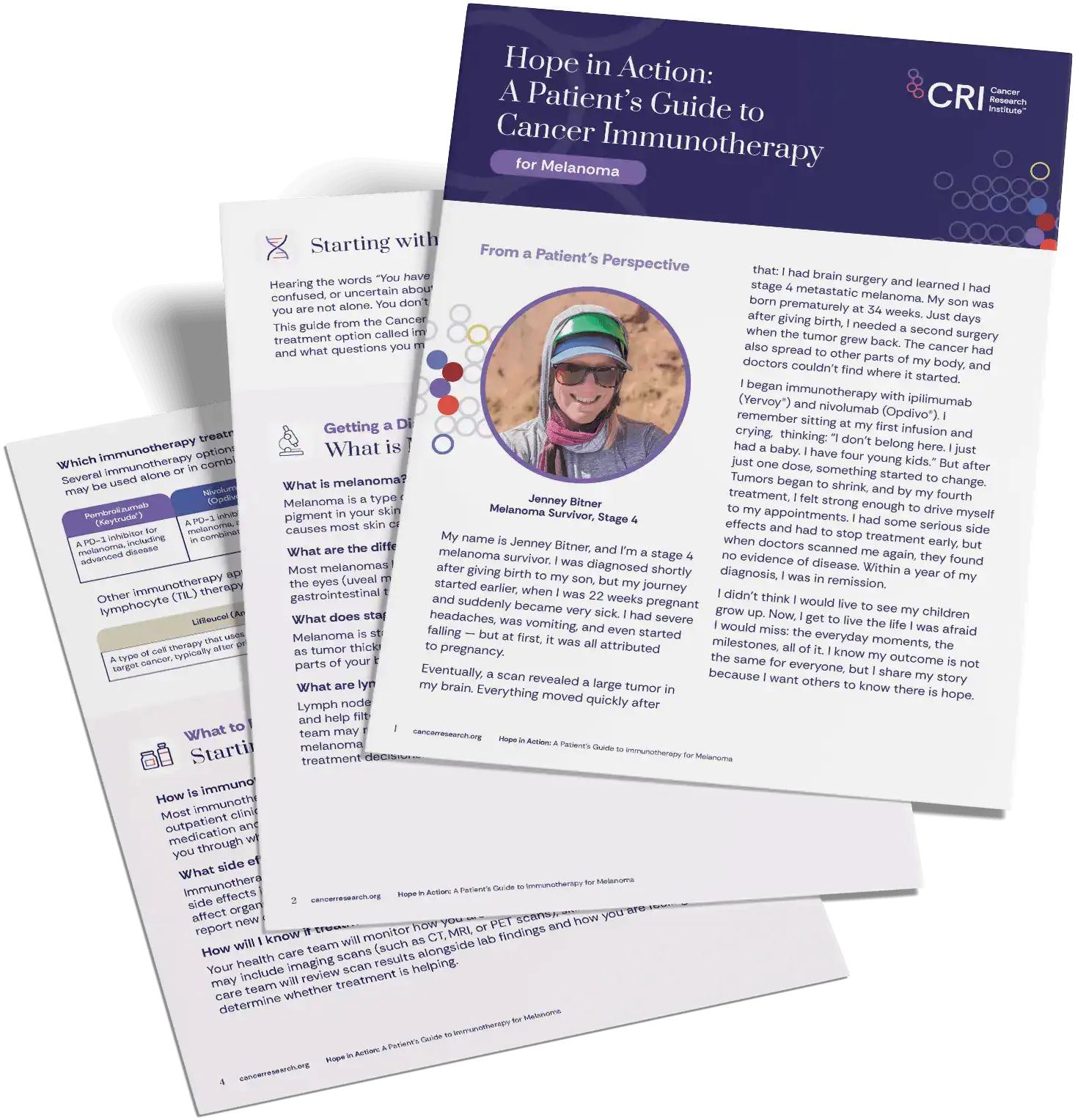
A Patient’s Guide to Immunotherapy for Melanoma
Your path to understanding immunotherapy for melanoma — guided by survivors, experts, and hope.
Find a Clinical Trial Near You

Sources
Melanoma of the Skin Statistics
(2022) GLOBOCAN, International Agency for Research on Cancer
Key Statistics for Melanoma Skin Cancer
(2026) American Cancer Society
Cancer Stat Facts: Melanoma of the Skin
(2025) National Cancer Institute (SEER)
Cancer Statistics, 2026
(2026) CA: A Cancer Journal for Clinicians
Reducing Risk for Skin Cancer
(2026) U.S. Centers for Disease Control and Prevention
FDA Approved Ipilimumab Injection for the Treatment of Unresectable or Metastatic Melanoma
(2011) U.S. FDA
Oncology (Cancer)/Hematologic Malignancies Approval Notifications
(2014-2024) U.S. FDA
FDA Approves Opdualag for Unresectable or Metastatic Melanoma
(2022) U.S. FDA
FDA Grants Accelerated Approval to Lifileucel for Unresectable or Metastatic Melanoma
(2024) U.S. FDA
A Gene Encoding an Antigen Recognized by Cytolytic T Lymphocytes on a Human Melanoma
(1991) Science
Long-Term Outcomes With Nivolumab Plus Ipilimumab or Nivolumab Alone Versus Ipilimumab in Patients With Advanced Melanoma
(2021) Journal of Clinical Oncology
Israel Cancer Research Fund and Cancer Research Institute Announce Co-Funding of Grant to Address Immunotherapy Resistance in Melanoma
(2026) Cancer Research Institute / Israel Cancer Research Fund
Join CRI in Shaping the Future of Immunotherapy
Support the pioneering work of CRI in advancing immunotherapy.