
Immunotherapy for Sarcoma and Bone Cancer
Learn how immunotherapy is used to treat certain types of sarcoma and bone cancer
What Is Sarcoma?
Sarcomas are a diverse group of rare cancers. They account for about 1% of all cancers diagnosed in adults and about 15% of cancers in children. In the U.S., an estimated 18,020 new cases and 7,610 deaths are expected in 2026.
Sarcoma Statistics
Worldwide
~1%
of all cancers diagnosed in adults
15%
of all cancers diagnosed in children
U.S.-Specific Statistics
18,020
New cases diagnosed each year
7,610
Deaths expected in 2026
66%
Five-year survival rate
Sarcomas develop in your body’s connective tissues, such as your bone, cartilage, muscle, fat, nerves, and blood vessels. This makes sarcomas different from many more common cancers that begin in the cells lining your organs.
There are more than 70 subtypes of sarcoma. Each has different biological features, treatment options, and responses to immunotherapy. Sarcomas are generally divided into two main groups:
- Soft tissue sarcomas, such as liposarcoma, leiomyosarcoma, and synovial sarcoma
- Bone sarcomas, such as osteosarcoma, Ewing sarcoma, chondrosarcoma, and chordoma
Other subtypes include gastrointestinal stromal tumor (GIST), alveolar soft part sarcoma (ASPS), and desmoplastic small round cell tumor. Some sarcomas, including osteosarcoma and Ewing sarcoma, occur more often in children, adolescents, and young adults.
Survival varies widely based on the sarcoma subtype, where it develops, and whether it has spread. The overall five-year survival rate is about 66% for soft tissue sarcoma and 69% for bone sarcoma. When sarcoma is detected before it has spread, surgery is often effective at removing the cancer, and five-year survival is approximately 83%. Once it has spread to distant parts of the body, five-year survival falls to about 17%. Survival for metastatic bone sarcoma is harder to estimate because outcomes vary significantly among subtypes.
What Causes Sarcoma?
Sarcoma develops when genetic changes cause cells in bone or soft tissue to grow and divide without normal controls. For most people, it is not clear what caused these changes.
A small proportion of sarcomas are associated with known risk factors, including:
- Previous radiation therapy
- Exposure to certain chemicals
- Long-term swelling caused by damage to the lymphatic system, known as lymphedema
- Infection with human herpesvirus 8, which is associated with Kaposi sarcoma
- Certain hereditary conditions, including Li-Fraumeni syndrome, hereditary retinoblastoma, neurofibromatosis type 1, and familial adenomatous polyposis (FAP)
Having a risk factor does not mean that you will develop sarcoma. Many people diagnosed with sarcoma have no known risk factors.
What Are the Symptoms of Sarcoma?
Symptoms depend on where the cancer begins, how large it is, and whether it is pressing on nearby tissues or organs.
Soft tissue sarcomas often first appear as a painless lump or swelling. It may go unnoticed until it grows large enough to press on nearby nerves, muscles, or organs. Bone sarcomas are more likely to cause pain or swelling in the affected area. The pain may worsen at night or during activity. In some cases, the cancer can weaken the bone and cause a fracture.
Possible symptoms include:
- A new or growing lump or area of swelling, particularly one that is deep under the skin or larger than a golf ball
- Persistent bone pain that worsens over time or is worse at night or during activity
- Swelling or tenderness near a bone or joint
- A bone that breaks with little or no injury
- Abdominal pain or a growing mass in the abdomen
These symptoms do not always mean that you have cancer. They are more often caused by other conditions. Talk with your health care team about symptoms that are new, unusual, or do not go away.
How Is Sarcoma Diagnosed?
Diagnosing sarcoma usually begins with a physical exam and imaging tests, such as an MRI, CT scan, or X-ray. Your doctor will also perform a biopsy to confirm the diagnosis.
Because sarcomas can be difficult to identify and classify, the biopsy should be reviewed by an experienced pathologist. Testing can help identify the specific sarcoma subtype, the tumor’s grade, whether the cancer has spread, and whether the tumor has genetic changes, proteins, or other biomarkers that could guide treatment.
Can Sarcoma Be Prevented or Detected Early?
Most sarcomas cannot be prevented because their cause is unknown. There are also no standard screening tests for people at average risk.
Because sarcomas are rare and can develop almost anywhere in the body, they are usually found after symptoms appear. Knowing the possible warning signs and talking to your doctor about unusual or persistent symptoms are important steps toward an earlier diagnosis.
People with hereditary conditions that increase their risk of sarcoma may need regular monitoring. Talk to your health care team about what screening or follow-up may be appropriate based on your individual risk factors.
How Is Sarcoma Treated?
Treatment depends on the type of sarcoma, where the cancer developed, whether it has spread, and the patient’s overall health. Standard treatment options include surgery, radiation therapy, chemotherapy, targeted therapy, and immunotherapy.
Surgery is the main treatment for many sarcomas, and for early-stage disease, it is often the only treatment needed. Radiation or chemotherapy may be given before or after surgery (periadjuvant) to help shrink the tumor or reduce the risk of recurrence. For advanced, recurrent, or metastatic sarcoma, systemic treatments (treatments that travel throughout the body) may be used. These include chemotherapy, targeted therapy, and immunotherapy.
Immunotherapies Used to Treat Sarcoma
Immunotherapy is a type of cancer treatment that uses your immune system to recognize and attack cancer cells. It can help immune cells overcome cancer’s defenses so they can better identify and fight the disease. Because sarcoma includes many biologically different cancers, immunotherapy is currently approved only for specific subtypes or tumors with certain biomarkers.
Immune Checkpoint Inhibitors:
Immune checkpoint inhibitors (ICIs) block signals such as PD-1, PD-L1, or CTLA-4 that can hold back an immune response. Blocking these checkpoints releases a natural “brake” on your immune system, allowing immune cells to respond more effectively to cancer.
- Atezolizumab (Tecentriq®): Approved for adults and children ages 2 and older with unresectable or metastatic alveolar soft part sarcoma (ASPS). It blocks the PD-L1 immune checkpoint.
- Dostarlimab (Jemperli®): Approved for certain patients with recurrent or advanced mismatch repair deficient (dMMR) tumors, including sarcomas, that have progressed following previous treatment and have no satisfactory alternative options. It blocks the PD-1 immune checkpoint.
- Pembrolizumab (Keytruda®): Approved for certain patients with unresectable or metastatic tumors, including sarcomas, that are microsatellite instability-high (MSI-H), dMMR, or have a high tumor mutational burden (TMB-H). It blocks the PD-1 immune checkpoint.
Engineered T-cell receptor (TCR) therapy:
Engineered T-cell receptor (TCR) therapy is a type of cell and gene therapy. It involves collecting and genetically modifying immune cells in a laboratory so they can recognize a specific protein on cancer cells before being returned to the patient.
- Afamitresgene autoleucel (Tecelra®): Approved for patients ages 12 and older with unresectable or metastatic synovial sarcoma that has progressed after chemotherapy. The tumor must express the MAGE-A4 antigen, and the patient must have a qualifying HLA type.
Targeted Therapies Used to Treat Sarcoma
Targeted therapies block specific pathways or molecules that cancer cells use to grow. Unlike immunotherapy, which activates your immune system, these treatments act directly on biological signals that support tumor growth. In sarcoma, targeted therapies are usually approved for specific subtypes or tumors with particular genetic features.
- Nab-sirolimus (Fyarro®): Approved for adults with locally advanced, unresectable, or metastatic malignant perivascular epithelioid cell tumor (PEComa). It is an mTOR inhibitor.
- Nirogacestat (Ogsiveo®): Approved for adults with progressing desmoid tumors, a rare type of aggressive fibromatosis, who require systemic treatment. It is a gamma-secretase inhibitor.
- Pazopanib (Votrient®): Approved for patients with advanced soft tissue sarcoma who have previously received chemotherapy. It blocks VEGFR and related pathways that tumors use to build blood vessels.
Targeted Therapies for Gastrointestinal Stromal Tumors (GISTs):
Gastrointestinal stromal tumors (GISTs) are the most common sarcoma of the digestive tract and are often associated with mutations in the KIT gene or the PDGFRA gene. Targeted therapies that block these signals are standard treatment for advanced GIST. They are typically given in a defined sequence as the tumor develops resistance.
- Avapritinib (Ayvakit®): Approved for patients with unresectable or metastatic GIST that has a mutation in exon 18 of the PDGFRA gene (including c.2525A>T, p.D842V) and do not respond to other kinase inhibitors. It is a KIT and PDGFRA inhibitor.
- Imatinib (Gleevec®): Approved as a first-line treatment for patients with KIT-positive unresectable or metastatic GIST. It may also be given after surgery (adjuvant) to lower the risk of recurrence. It is a KIT and PDGFRA inhibitor.
- Regorafenib (Stivarga®): Approved for patients with GIST that has progressed after treatment with imatinib and sunitinib. It is a multi-target kinase inhibitor.
- Ripretinib (Qinlock®): Approved for patients with advanced GIST that have progressed after treatment with three or more prior kinase inhibitors, including imatinib. It is a KIT and PDGFRA inhibitor.
- Sunitinib (Sutent®): Approved for patients with GIST that have progressed on, or who cannot tolerate, treatment with imatinib. It is a multi-target kinase inhibitor.
Some sarcomas are caused by chromosomal translocations, which occur when pieces of chromosomes break and reattach in a different location. This can join two genes and create an abnormal fusion gene that promotes cancer growth. For patients whose sarcoma has an NTRK gene fusion, larotrectinib (Vitrakvi®), entrectinib (Rozlytrek®), or repotrectinib (Augtyro®) may be treatment options.
Are There Immunotherapy Clinical Trials for Patients with Sarcoma?
Clinical trials are studying how to make sarcoma treatment more effective, prevent or overcome resistance, and reduce serious side effects. They are especially important for sarcoma because these tumors are rare and include many distinct subtypes. Clinical trials may be available at any stage of sarcoma treatment, not only after standard options have stopped working.
Researchers are studying several immunotherapy approaches, including:

Immune checkpoint inhibitors (ICIs) release your immune system’s “brakes” so immune cells can respond more effectively to cancer. Many sarcoma subtypes respond only modestly to currently approved checkpoint inhibitors. Researchers are testing next-generation immune checkpoints such as LAG-3 and TIGIT, as well as combinations to improve treatment responses.

Therapeutic cancer vaccines train your immune system to recognize proteins or genetic mutations found in cancer cells. Vaccines targeting cancer antigens such as NY-ESO-1 have been shown to trigger an immune response. Researchers are continuing to study whether these responses translate into meaningful and lasting benefits for patients.

Cell and gene therapies collect, expand, or engineer immune cells so they can better find and attack cancer. Researchers are developing TCR therapies and chimeric antigen receptor (CAR) T-cell therapies for targets such as MAGE-A4, NY-ESO-1, HER2, GD2, and other proteins associated with specific sarcoma subtypes.
How Is CRI Advancing Sarcoma Research?
Sarcoma has a distinctive place in the history of cancer immunotherapy. More than a century ago, surgeon William B. Coley, MD, observed that some patients with bone and soft tissue cancers experienced tumor regression after developing serious infections. His subsequent research provided early evidence that activating the immune system could help fight cancer. This work helped inspire the founding of the Cancer Research Institute (CRI) in 1953.
CRI continues this legacy by supporting research across many sarcomas and bone cancers, from studies of how these tumors interact with the immune system to the development of new treatment strategies. In the early 2010s, CRI-supported investigators helped define cancer immunoediting and contributed to early advances in engineered T-cell therapies for sarcoma. In 2019, CRI and the Chordoma Foundation established a research partnership to accelerate immunotherapy development for chordoma, a rare cancer that develops in the bones of the skull base or spine.
Today, CRI-funded scientists are pursuing several approaches to improve immune-based treatments for sarcoma and other difficult-to-treat solid tumors, including:
- CRI Lloyd J. Old STAR Paul Beavis, PhD, at the University of Melbourne, is engineering CAR T cells to overcome the immune-suppressing environment surrounding solid tumors and to remain active long enough to attack cancer. His approach advanced into a phase 1 clinical trial at the Peter MacCallum Cancer Centre in 2025.
- CRI Lloyd J. Old STAR Justin Eyquem, PhD, at University of California, San Francisco, developed a method for generating CAR T cells directly inside the body. This approach could reduce the time, complexity, and cost of manufacturing individualized cell therapies while expanding their potential use against solid tumors.
- CRI Irvington Postdoctoral Fellow Md Torikul Islam, PhD, at UT Southwestern Medical Center, is studying the metabolic adaptations that allow osteosarcoma cells to survive in the bloodstream, evade immune attack, and spread to other organs. His goal is to identify vulnerabilities that could prevent metastasis and make osteosarcoma more responsive to immunotherapy.
- CRI-Chordoma Foundation CLIP Investigator Matija Snuderl, MD, at New York University School of Medicine, is identifying peptides found specifically on chordoma cells and developing peptide-centered CAR T-cell therapies. His goal is to target chordoma more precisely while limiting damage to healthy tissues.

“I would like to thank CRI for their vision in supporting high-risk, high-reward science. This award will improve my ability to access collaborative networks that will increase the significance and impact of my work.”
Paul Beavis, PhD
CRI Lloyd J. Old STAR, University of Melbourne
Sarcoma Statistics
Worldwide
~1%
of all cancers diagnosed in adults
~15%
of all cancers diagnosed in children
U.S.-Specific Statistics
18,020
New cases diagnosed each year
7,610
Deaths expected in 2026
66%
Five-year survival rate
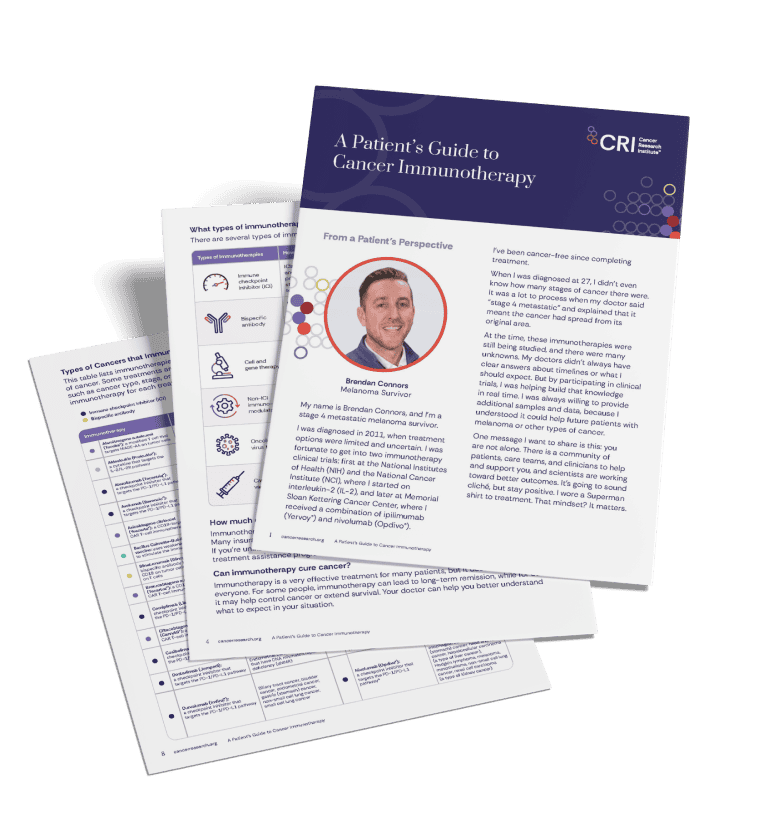
A Patient’s Guide to Cancer Immunotherapy
Your path to understanding immunotherapy — guided by survivors, experts, and hope
Find a Clinical Trial Near You

Sources
Cancer Stat Facts: Soft Tissue including Heart Cancer
(2026) National Cancer Institute (SEER)
Key Statistics for Soft Tissue Sarcomas
(2026) American Cancer Society
Key Statistics for Bone Cancer
(2026) American Cancer Society
Cancer Facts & Figures 2026
(2026) American Cancer Society
FDA Grants Accelerated Approval to Afamitresgene Autoleucel for Unresectable or Metastatic Synovial Sarcoma
(2024) U.S. Food and Drug Administration (FDA)
US WorldMeds Receives Full U.S. FDA Approval of TECELRA® (Afamitresgene Autoleucel) with an Expanded Indication
(2026) US WorldMeds®
FDA D.I.S.C.O. Burst Edition: FDA Approval of Tecentriq (Atezolizumab) for Unresectable or Metastatic Alveolar Soft Part Sarcoma
(2022) U.S. FDA
Atezolizumab for Advanced Alveolar Soft Part Sarcoma
(2023) New England Journal of Medicine
Drugs Approved for Soft Tissue Sarcoma
(2026) National Cancer Institute
Drugs Approved for Gastrointestinal Stromal Tumors
(2025) National Cancer Institute
Tumor Regression in Patients With Metastatic Synovial Cell Sarcoma and Melanoma Using Genetically Engineered Lymphocytes Reactive With NY-ESO-1
(2011) Journal of Clinical Oncology
Cancer exome analysis reveals a T-cell-dependent mechanism of cancer immunoediting
(2012) Nature
Join CRI in Shaping the Future of Immunotherapy
Support the pioneering work of CRI in advancing cancer research.