
Immunotherapy for Ovarian Cancer
Learn how immunotherapy is used to treat certain ovarian cancers
What Is Ovarian Cancer?
Ovarian cancer is a gynecologic cancer and a leading cause of cancer death among women. In 2024, approximately 331,000 women were diagnosed with ovarian cancer worldwide, and more than 200,000 died from the disease. In the U.S., an estimated 21,010 new cases and 12,450 deaths are expected in 2026.
Ovarian Cancer Statistics
Worldwide
18th
Most common cancer
330K
New cases diagnosed each year
U.S.-Specific Statistics
21,010
New cases diagnosed each year
12,450
Deaths expected in 2026
52%
Five-year survival rate
The ovaries are two small female reproductive organs that produce eggs and hormones. Ovarian cancer develops when cells in an ovary grow out of control. Some ovarian cancers are now believed to originate in the fallopian tubes, the narrow tubes that carry eggs from the ovaries toward the uterus. A closely related cancer can also develop in the peritoneum, the tissue that lines the inside of the abdomen.
Because ovarian, fallopian tube, and primary peritoneal cancers share many features and are generally treated in the same ways, they are often grouped together under “ovarian cancer”.
Ovarian cancer is generally divided into three main types:
- Epithelial ovarian cancer may begin in the ovary or fallopian tube and accounts for about 90% of ovarian cancers. High-grade serous carcinoma is the most common subtype.
- Germ cell tumors begin in the cells that produce eggs. They are uncommon and occur more often in younger people.
- Stromal tumors begin in the hormone-producing and structural tissues of the ovary. These tumors are also uncommon.
There is no single cause of ovarian cancer. Factors that can increase risk include older age, a family history of ovarian or breast cancer, certain germline (hereditary cancer) genetic changes, endometriosis, and certain forms of menopausal hormone therapy.
Pregnancy, breastfeeding, and the use of oral contraceptives are associated with a lower risk of ovarian cancer.
When ovarian cancer is found early, before it spreads, the five-year relative survival rate for the most common type (epithelial ovarian cancer) is about 92%. Once the cancer has spread to nearby tissues or lymph nodes, five-year survival drops to 71%, and to 32% when it reaches distant parts of the body (metastatic disease).
But outcomes are improving: ovarian cancer death rates in the U.S. have fallen by about 45% since the mid-1970s, due in part to wider use of oral contraceptives and to major advances in surgery and treatment. In 2026, the U.S. Food and Drug Administration (FDA) approved the first immunotherapy specifically for ovarian cancer.
Is There Screening for Ovarian Cancer, and How Is It Diagnosed?
There is currently no routine screening test recommended for ovarian cancer in people at average risk, and no screening approach is known to reduce the risk of dying from the disease.
A Pap test (Pap smear), which screens for cervical cancer, does not screen for ovarian cancer.
About 25% of ovarian cancers are linked to hereditary genetic mutations. The best known are mutations in the BRCA1 and BRCA2 genes, which are associated with hereditary breast and ovarian cancer (HBOC) syndrome, and DNA mutations associated with Lynch syndrome. Other hereditary gene mutations can also increase ovarian cancer risk.
If ovarian, breast, pancreatic, prostate, or colorectal cancers run in your family, talk with your health care team about whether genetic counseling and testing may be appropriate.

You may have heard that a transvaginal ultrasound or CA-125 blood test can be used to screen ovarian cancer, but neither test works well enough to be used as routine screening.
These tests have not been shown to reduce ovarian cancer deaths when used for routine screening and can produce abnormal results when cancer is not present, which may lead to additional testing or unnecessary procedures.
When ovarian cancer is suspected, your health care team may use imaging tests, blood tests, and a physical exam to learn more. A diagnosis is confirmed by examining tumor tissue under a microscope. The tissue is usually collected during surgery, although a needle biopsy may be used in some situations.
After ovarian cancer is diagnosed, your health care team may recommend different types of genetic and biomarker testing. Testing may look for hereditary or tumor-specific mutations in BRCA1, BRCA2, and other genes; homologous recombination deficiency (HRD); folate receptor alpha (FRα); and PD-L1, which can determine what targeted therapies and immunotherapies are most likely to help.
What Are the Symptoms of Ovarian Cancer?
Ovarian cancer can be difficult to detect early because its symptoms may be mild or resemble those caused by more common conditions.
Possible symptoms include:
- Bloating or swelling in the abdomen
- Pelvic or abdominal pain or pressure
- Difficulty eating or feeling full quickly
- A frequent or urgent need to urinate
- Changes in bowel habits, such as constipation
- Back pain
- Fatigue
More advanced disease, when the cancer has spread beyond the ovaries, may cause other symptoms, such as shortness of breath or abdominal swelling from a buildup of fluid.
Having these symptoms does not necessarily mean you have ovarian cancer. But if symptoms are new, persistent, or occur about 12 or more times a month, talk to your health care team.
Can Ovarian Cancer Be Prevented?
Not all ovarian cancers can be prevented, but knowing your personal and family history can help you understand your personal risk.
Ways to help manage ovarian cancer risk include:
- Know your family history. Ovarian, breast, pancreatic, prostate, colorectal, and other cancers can sometimes be linked through a hereditary cancer syndrome.
- Ask whether genetic counseling or testing is appropriate. Genetic testing may identify DNA mutations that may affect both your cancer risk and the risks faced by family members.
- Discuss risk-reducing surgery if you are at high risk. For people with certain genetic mutations, surgery to remove the ovaries and fallopian tubes can substantially lower your risk of ovarian cancer.
- Understand factors associated with lower risk. Pregnancy, breastfeeding, and use of oral contraceptives are associated with a reduced risk of ovarian cancer.
- Talk to your doctor about persistent symptoms. Because there is no routine screening test for people at average risk, reporting symptoms that are new or do not go away is one of the best tools for finding cancer sooner.
How Is Ovarian Cancer Treated?
Treatment for ovarian cancer depends on the type and stage of the cancer, the tumor’s genetic features, and a patient’s overall health. For most people, treatment begins with surgery to remove as much of the cancer as possible, followed by platinum-based chemotherapy.
For advanced, recurrent, or platinum-resistant disease, systemic treatments that travel throughout the body play a central role. These may include targeted therapies and immunotherapy.
After initial chemotherapy, many patients receive maintenance therapy to delay or prevent the cancer from returning. Maintenance treatment may include a PARP inhibitor, bevacizumab (Avastin®), or both, depending on the tumor’s features and response to treatment.
Treatment options have expanded substantially in recent years with the development of PARP inhibitors, antibody-drug conjugates, and immunotherapy. In 2026, the U.S. FDA approved the first immune checkpoint inhibitor (ICI) specifically for certain patients with ovarian, fallopian tube, or primary peritoneal cancer.
Immunotherapies Used to Treat Ovarian Cancer
Immunotherapy is a type of cancer treatment that uses your immune system to recognize and attack cancer cells. It can help immune cells overcome cancer’s defenses so they can better identify and fight the disease.
Immunotherapy is not used for everyone with ovarian cancer. It is currently an option for certain patients whose cancers have specific biomarkers or for platinum-resistant disease that expresses the PD-L1 protein.
Immune Checkpoint Inhibitors:
Immune Checkpoint Inhibitors (ICIs) are a type of immunotherapy that blocks immune checkpoints, such as PD-1, PD-L1, or CTLA-4. Blocking these signals releases a natural “brake” on your immune system, allowing immune cells to respond more effectively to cancer.
- Pembrolizumab (Keytruda®): Approved for certain patients with platinum-resistant epithelial ovarian, fallopian tube, or primary peritoneal cancer whose tumors express PD-L1. It is given in combination with paclitaxel (Taxol) chemotherapy (with or without bevacizumab) after one or two prior treatments. Pembrolizumab is also approved across cancer types for some unresectable or metastatic tumors, including some ovarian cancers, that are microsatellite instability-high (MSI-H), mismatch repair deficient (dMMR), or have a high tumor mutational burden (TMB-H). It blocks the PD-1 immune checkpoint.
- Dostarlimab (Jemperli®): Approved for certain patients with recurrent or advanced mismatch repair deficient (dMMR) tumors, including some ovarian cancers, that have progressed after prior treatment and have no satisfactory alternative options. It blocks the PD-1 immune checkpoint.
Targeted Therapies Used to Treat Ovarian Cancer
Targeted therapies act on specific genes, proteins, or pathways that cancer cells depend on. Unlike immunotherapy, which engages your immune system, targeted therapies work by targeting a feature of the tumor. Biomarker testing can help identify whether one of these treatments may be appropriate.
PARP Inhibitors:
PARP inhibitors block a protein that cells use to repair damaged DNA. Some ovarian cancer cells, especially those with BRCA1 or BRCA2 gene mutations or HRD, already have difficulty repairing DNA. Blocking the PARP protein can make it even harder for these cancer cells to survive.
PARP inhibitors are most commonly used as maintenance therapy after ovarian cancer has responded to platinum-based chemotherapy to prevent recurrence.
- Olaparib (Lynparza®): Approved as maintenance therapy after first-time platinum-based chemotherapy for patients with BRCA1- or BRCA2- mutated advanced epithelial ovarian, fallopian tube, or primary peritoneal cancer. It may also be used in combination with bevacizumab as maintenance therapy for HRD-positive advanced epithelial ovarian, fallopian tube, or primary peritoneal cancer. Olaparib is a PARP inhibitor.
- Niraparib (Zejula®): Approved as first-line maintenance therapy for patients with HRD-positive advanced epithelial ovarian, fallopian tube, or primary peritoneal cancer after response to platinum-based chemotherapy. Niraparib is a PARP inhibitor.
- Rucaparib (Rubraca®): Approved as maintenance therapy for patients with recurrent epithelial ovarian, fallopian tube, or primary peritoneal cancer with a BRCA1 or BRCA2 gene mutation after response to platinum-based chemotherapy. Rucaparib is a PARP inhibitor.
Antibody-Based Therapies:
- Bevacizumab: Approved as first-line treatment for patients with advanced epithelial ovarian, fallopian tube, or peritoneal cancer in combination with chemotherapy, followed by bevacizumab on its own as maintenance. It may also be used for certain platinum-sensitive and platinum-resistant recurrent ovarian cancers. Bevacizumab is a monoclonal antibody that blocks the growth of tumor blood vessels.
- Mirvetuximab soravtansine (Elahere®): Approved for FRα-positive, platinum-resistant epithelial ovarian, fallopian tube, or peritoneal cancer in patients who have received one to three prior treatments. It is an antibody-drug conjugate that recognizes FRα and delivers cancer-killing medicine directly to tumor cells.
Other Targeted Therapies:
- Avutometinib + defactinib (Avmapki Fakzynja Co-Pack™): Approved for adults with KRAS-mutated recurrent low-grade serous ovarian cancer who have received previous systemic treatment. Avutometinib targets the RAF/MEK pathway, and defactinib inhibits FAK, signaling pathways that cancer cells use to grow.
- Relacorilant (Lifyorli™): Approved in combination with nab-paclitaxel for adults with platinum-resistant epithelial ovarian, fallopian tube, or primary peritoneal cancer who have received one to three previous systemic treatment regimens, including bevacizumab. Relacorilant blocks the glucocorticoid receptor, a pathway that can help cancer cells resist chemotherapy.
Are There Immunotherapy Clinical Trials for Patients with Ovarian Cancer?
Immunotherapy is approved for some patients with ovarian cancer, and researchers are working to understand how to make these treatments effective for more people. Clinical trials may provide access to promising new approaches that are not yet widely available. They may be available at any stage of ovarian cancer treatment, not only after standard options have stopped working.
Researchers are studying several immunotherapy approaches, including:

Immune checkpoint inhibitors (ICIs) help release your immune system’s “brakes”, allowing it to better recognize and attack cancer. Researchers are testing next-generation inhibitors, new targets, and combinations to help more patients benefit.

Therapeutic cancer vaccines train your immune system to recognize proteins or genetic changes found on cancer cells. Researchers are developing vaccines built based on shared ovarian cancer antigens, such as NY-ESO-1 and MAGE, and personalized vaccines based on unique mutations in an individual patient’s tumor.

Cell and gene therapies use or engineer immune cells so they can better find and attack cancer. Researchers are evaluating tumor-infiltrating lymphocyte (TIL) therapy, chimeric antigen receptor (CAR) T-cell therapy, and engineered T-cell (TCR) therapy aimed at ovarian cancer targets such as FRα, mesothelin, the MUC16 gene (which is associated with the CA-125 tumor marker), and NY-ESO-1.

Immune cell engagers bring the immune system into direct contact with tumors or deliver treatment straight to cancer cells. Researchers are developing additional approaches aimed at proteins found on ovarian cancer cells.

Combination approaches pair immunotherapy with other treatments to improve responses. Many ovarian cancer trials combine immunotherapy with chemotherapy, PARP inhibitors, or other immune-based treatments and use biomarkers to predict which patients are most likely to benefit.
How Is CRI Advancing Ovarian Cancer Research?
Since 1985, the Cancer Research Institute (CRI) has dedicated more than $21 million in grant funding to discover and develop effective immunotherapies to treat patients with ovarian cancer.
CRI-funded research has helped establish many important connections between ovarian cancer and the immune system. CRI Scientific Advisory Council Associate Director Kunle Odunsi, MD, PhD, at the University of Chicago, identified the NY-ESO-1 protein as a promising target for cancer vaccines and other antigen-directed immunotherapies. CRI CLIP Investigator Juan Cubillos-Ruiz, PhD, at Weill Cornell Medicine, showed how cellular stress, metabolism, and other conditions inside ovarian tumors can suppress immune responses and how those barriers might be overcome.
Today, CRI-funded scientists are pursuing a range of approaches to make immunotherapy effective for more ovarian cancer patients, including:
- CRI Irvington Postdoctoral Fellow Kaushik Sen, PhD, at Weill Cornell Medicine, is studying how the nutrients available within ovarian tumors affect cancer and immune cells. His research is exploring whether changing tumor metabolism can slow cancer growth while strengthening anti-tumor immune responses, potentially creating new opportunities to combine metabolic treatments with immunotherapy.
- CRI Lloyd J. Old STAR Stacy Malaker, PhD, at Yale University, is pioneering “mucinomics”, a new technique to analyze the abnormal sugars attached to proteins called mucins. These changes are common in epithelial cancer and could provide new tools for earlier detection as well as targets for future immunotherapies.
- CRI Lloyd J. Old STAR Alberto Ciccia, PhD, at Columbia University, is investigating how mutations in DNA repair genes affect the way cancer cells interact with the immune system. His work aims to identify genetic changes that reveal new immunotherapy targets or help predict treatment response.
- CRI IGNITE Fellow Amin Aalipour, MD, PhD, at the Dana-Farber Cancer Institute, is engineering CAR T cells with more powerful, more precise cytokine-based tools to help them remain active against solid tumors. He will test the most promising approaches in clinical trials, starting in patients with ovarian cancer and lymphoma.

“Thanks to the generous funding provided by the CRI Lloyd J. Old STAR Program, we can now investigate how mutations in DNA repair genes influence the response of cancer cells to immunotherapy.”
Alberto Ciccia, PhD
CRI Lloyd J. Old STAR, Columbia University
Ovarian Cancer Statistics
Worldwide
18th
Most common cancer
330K
New cases diagnosed each year
U.S.-Specific Statistics
21,010
New cases diagnosed each year
12,450
Deaths expected in 2026
52%
Five-year survival rate
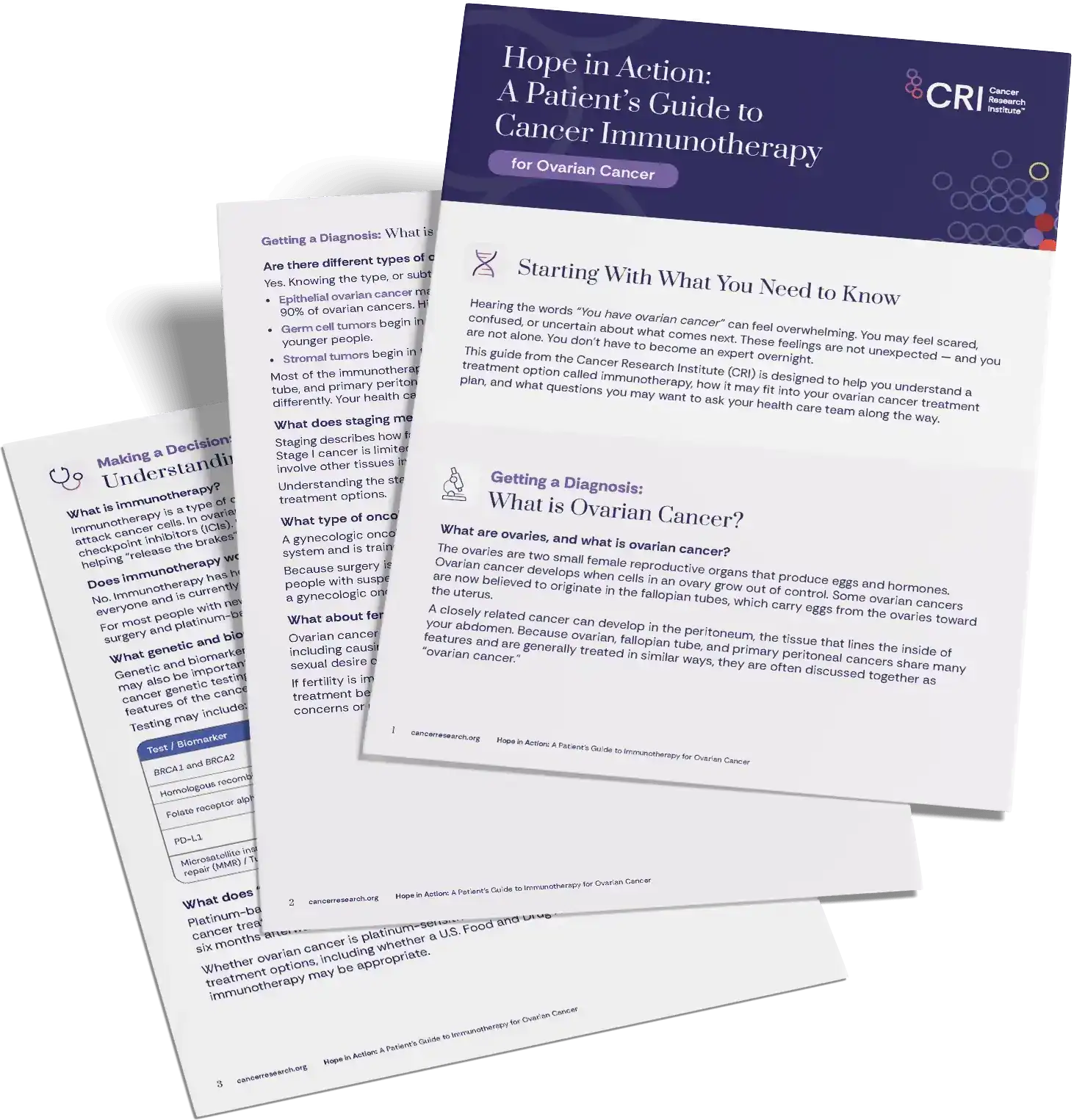
A Patient’s Guide to Immunotherapy for Ovarian Cancer
Your path to understanding ovarian cancer immunotherapy — guided by survivors, experts, and hope.
Find a Clinical Trial Near You

Sources
Ovarian Cancer
(2026) American Cancer Society (ACS)
Key Statistics for Ovarian Cancer
(2026) ACS
Cancer Stat Facts: Ovarian Cancer
(2026) National Cancer Institute (SEER)
Cancer Facts & Figures 2026
(2026) ACS
Cancer Statistics, 2026
(2026) CA: A Cancer Journal for Clinicians
Ovary Fact Sheet
(2024) GLOBOCAN, International Agency for Research on Cancer
Global Cancer Statistics 2024
(2026) CA: A Cancer Journal for Clinicians
Ovarian Cancer: Screening
(2018) U.S. Preventive Services Task Force
FDA Approves Pembrolizumab With Paclitaxel for Platinum-Resistant Epithelial Ovarian, Fallopian Tube, or Primary Peritoneal Carcinoma
(2026) U.S. Food and Drug Administration (FDA)
Oncology (Cancer)/Hematologic Malignancies Approval Notifications
(2014–2026) U.S. FDA
Join CRI in Shaping the Future of Immunotherapy
Support the pioneering work of CRI in advancing cancer research.