
When LaToya Bolds-Johnson was diagnosed with breast cancer at age 36, she already knew medicine well.
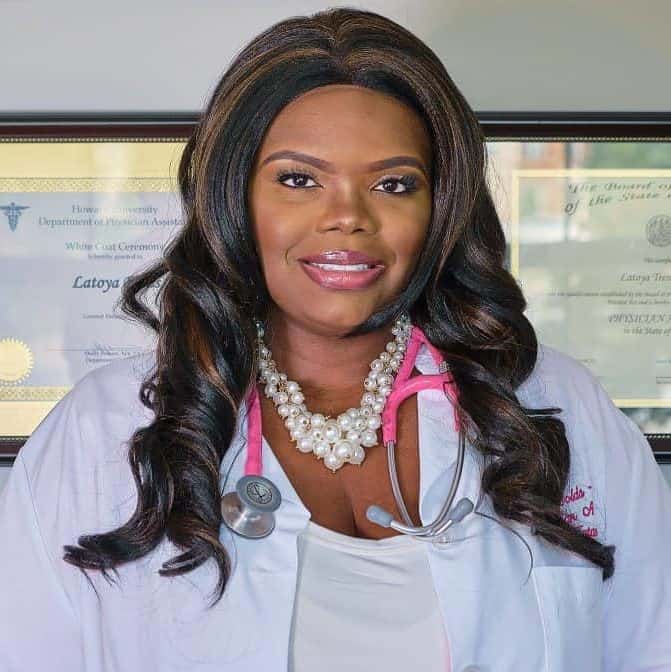
A physician assistant with years of clinical experience, LaToya was accustomed to being the person caring for patients. Suddenly, she was the patient — a mother of three young daughters facing stage 3 triple-negative breast cancer (TNBC) and trying to understand what came next.
Her experience would eventually lead her to immunotherapy, a clinical trial, and a new chapter of her career in clinical research. But it also reinforced something LaToya now encourages other patients to do: learn about your options, ask questions, and advocate for yourself.
For Breast Cancer Awareness Month, her story offers a window into why clinical trials matter — not only for advancing breast cancer treatment, but for helping researchers learn which treatments work, for whom, and how cancer care can continue to improve.
Breast Cancer Is Not One Disease
Breast cancer is the most commonly diagnosed cancer among women worldwide. In the United States, an estimated 321,910 new cases of invasive breast cancer are expected among women in 2026.
But “breast cancer” describes a group of diseases with important biological differences.
Breast cancers are commonly grouped according to proteins found on or inside cancer cells. Hormone receptor-positive cancers have receptors for estrogen, progesterone, or both. HER2-positive cancers have high levels of a protein involved in cell growth called HER2.
Triple-negative breast cancer (TNBC), the type LaToya was diagnosed with, does not have estrogen or progesterone receptors and does not have high levels of HER2. TNBC often grows and spreads more quickly than many other types of breast cancer.
Those differences matter because they help determine which treatments may work. Biomarker and genetic testing can provide additional information about a tumor and help patients and their health care teams understand available treatment options, including whether immunotherapy may be appropriate.
Today, immunotherapy is used for certain people with TNBC. Researchers are also studying how to make immune-based treatments effective for more people with breast cancer.
And much of that progress happens through clinical trials.
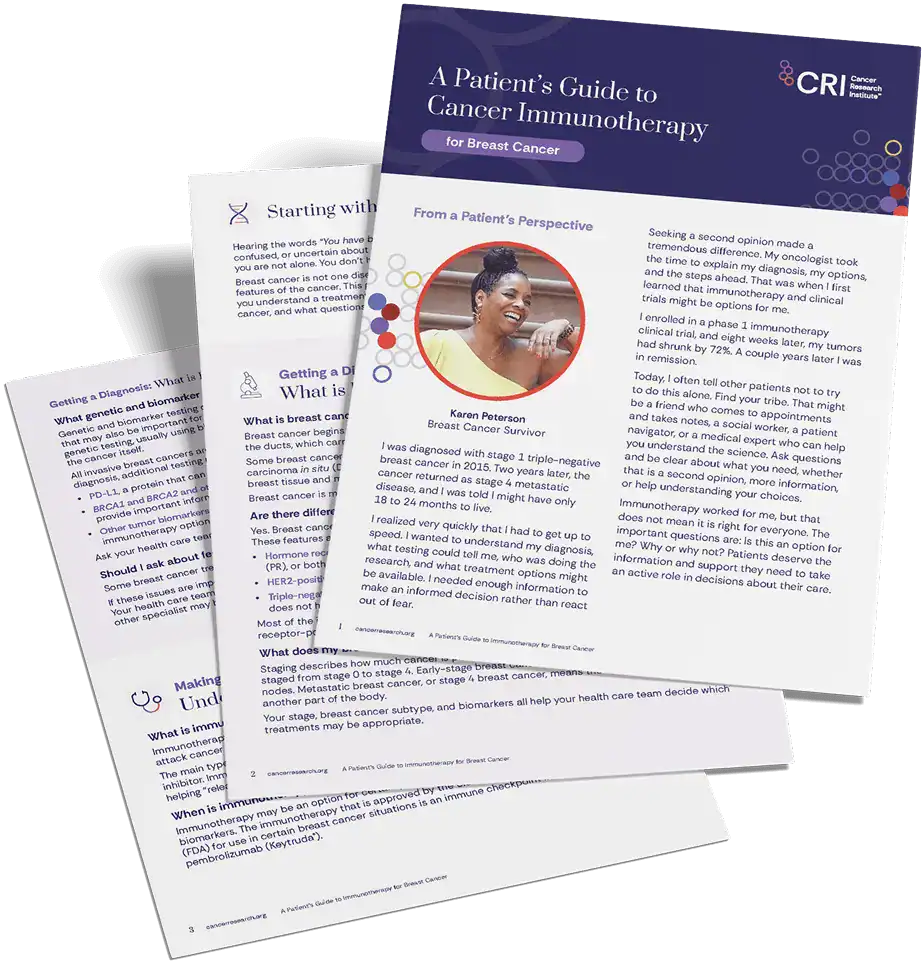
Clinical Trials Are Part of Cancer Care
Clinical trials are carefully monitored research studies that evaluate new treatments or new ways of using existing treatments.
For patients, trials may provide access to promising approaches that are not yet widely available. For researchers, they answer the questions necessary to move cancer treatment forward: Is a treatment safe? Does it work? Which patients are most likely to benefit? Could two treatments work better together?
Importantly, clinical trials are not necessarily a last resort.
Depending on a person’s diagnosis and individual circumstances, a trial may be worth considering at different points in care — including at diagnosis, if cancer returns, or when standard treatments are no longer working.
Researchers are currently evaluating several immune-based approaches for breast cancer, including new uses and combinations of checkpoint inhibitors, therapeutic cancer vaccines, cell and gene therapies, immune cell engagers, and combinations of immunotherapy with treatments such as chemotherapy, targeted therapies, radiation, and antibody-drug conjugates.
For LaToya, participating in a clinical trial became about something even bigger than her own treatment.
Building a “Medical Trust Fund”
LaToya is a mother to three daughters. When she thought about participating in research, she also thought about them.
“My whole mission with being the clinical trial participant is that I wanted to make sure that I was building a medical trust fund for my children,” she said.
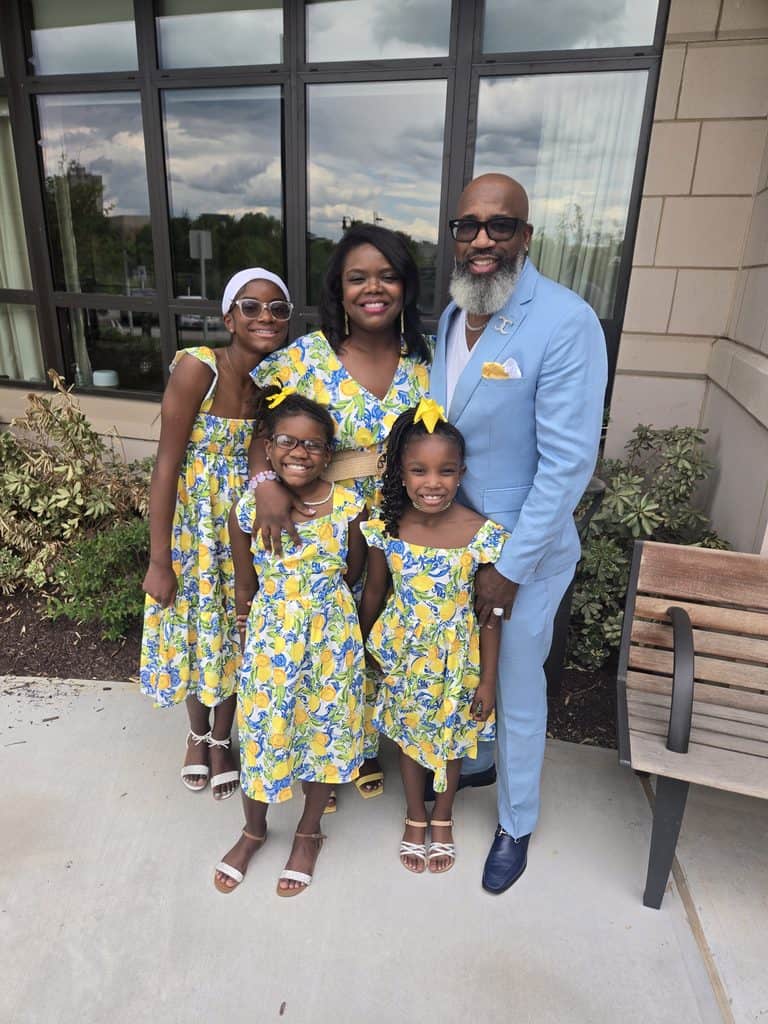
Just as a parent might build an educational or financial fund for a child’s future, LaToya saw contributing to medical research as another kind of investment.
She wanted her participation to add information researchers could learn from — information that might someday help her daughters, future generations of her family, and other people who share aspects of her biological background.
“I just wanted to make my mark on that, to move the needle forward in science so that we can get the latest and greatest treatment options for someone with my biological profile,” she said.
That participation matters. Clinical research needs people from different racial and ethnic backgrounds, ages, and communities so researchers can better understand how treatments affect the people who may ultimately receive them.
For LaToya, that issue became part of her advocacy after cancer as well.
From Patient to Clinical Research Advocate
July 2026 marked five years since LaToya’s diagnosis.
She has been off treatment, including immunotherapy, since April 2023. But she is also quick to point out that finishing treatment does not mean the experience of cancer simply disappears.
“The cancer journey never ends,” she said. There can still be fear of recurrence, along with the physical, mental, and emotional effects that remain after treatment.
Those experiences have shaped what came next.
LaToya has become involved in breast cancer advocacy, including efforts focused on clinical trial equity and the mental health of survivors. She is returning to the doctoral studies she put on hold after her diagnosis. And she has found another way to share her family’s experience: through a children’s book, When Life Gives You Lemons, Make Pink Lemonade. Told through the eyes of her daughter, the story follows three sisters as they turn their summer lemonade stand into a mission of hope after their mother’s breast cancer diagnosis.
Her professional life has taken an unexpected turn, too: the physician assistant who became a patient and clinical trial participant now works as a clinical research sub-investigator.
For her, it feels remarkably full circle.
She is once again working with patients — this time from the research side of medicine and in a field she came to understand in an intensely personal way.
Knowing Your Options Starts With Asking
A clinical trial will not be the right choice for every person with breast cancer. Neither will immunotherapy.
But patients deserve the opportunity to understand the options that may be available to them.
That can begin with a conversation with your health care team. What type of breast cancer do I have? What biomarkers have been tested? Is immunotherapy an option for me? Are there clinical trials I should consider now — or might there be trials to consider later?
For LaToya, asking questions and advocating for herself became part of navigating cancer. Today, the knowledge generated through clinical research is something she hopes will help make those conversations — and the options available to patients — better for generations to come.

CRI’s Clinical Trial Finder can help patients and caregivers search for immunotherapy clinical trials and connect with clinical trial navigation resources.