How can we help more people benefit from cancer immunotherapy? That question brings together researchers working across the field – from understanding how immune cells recognize cancer to designing new therapies and developing the tools to study them.
At the Society for Immunotherapy of Cancer’s (SITC) 41st Annual Meeting held November 4–8, 2026, in Phoenix, Arizona, those efforts came together through scientific presentations, discussions, and opportunities for collaboration.
For the Cancer Research Institute (CRI), this year marked the beginning of a new annual collaboration with SITC: bringing the CRI William B. Coley Award Lecture to the meeting. A fireside conversation between Coley Award recipient Éric Vivier, DVM, PhD, and CRI Lloyd J. Old STAR Yvonne Chen, PhD, offered another opportunity to explore the future of cell therapy and the technologies changing how scientists pursue it.
A New Annual Tradition: The Coley Award Lecture
The inaugural CRI William B. Coley Award Lecture at SITC recognized a scientist whose work has helped expand our understanding of the immune system’s ability to fight cancer.
For decades, Dr. Vivier has investigated natural killer (NK) cells, immune cells that can recognize and eliminate cancer cells. His discoveries have helped establish the importance of innate immunity in cancer research and informed the development of approaches that aim to harness NK cells therapeutically.
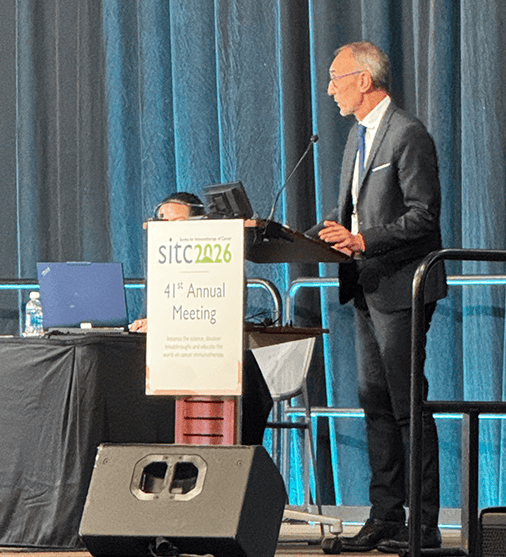
“For decades, Eric has helped shape our understanding of innate immunity and how we might harness it to treat cancer,” CRI CEO Alicia Zhou, PhD, said while introducing Dr. Vivier. “I am really thrilled and honored to be able to partner with SITC to bring our Coley Lecture to this conference. It’s a real pleasure.”
His lecture, “Harnessing NK Cells in Cancer Therapies,” brought that work to the SITC stage.
The new annual lecture creates a platform for recognizing that work and sharing it with the researchers and clinicians building on those discoveries.
“There is a very complementary role for CRI and SITC to move the future of cell cancer immunotherapy to help accelerate discovery to support science young investigators,” said Sandra Demaria, MD, Vice President of SITC. “We are stronger together.”
CRI Conversations: The Future of Cell Therapy
At CRI Conversations, Dr. Vivier and Dr. Chen explored the future of cell therapy in a candid discussion.
Together, they considered how NK cells and T cells could complement one another, and why understanding the tissues surrounding a tumor matters for developing effective therapies.
The conversation also addressed artificial intelligence (AI). Dr. Chen described using an AI tool to revisit a dataset her team had previously analyzed. Within hours, it produced analyses and figures – including errors that required careful review.
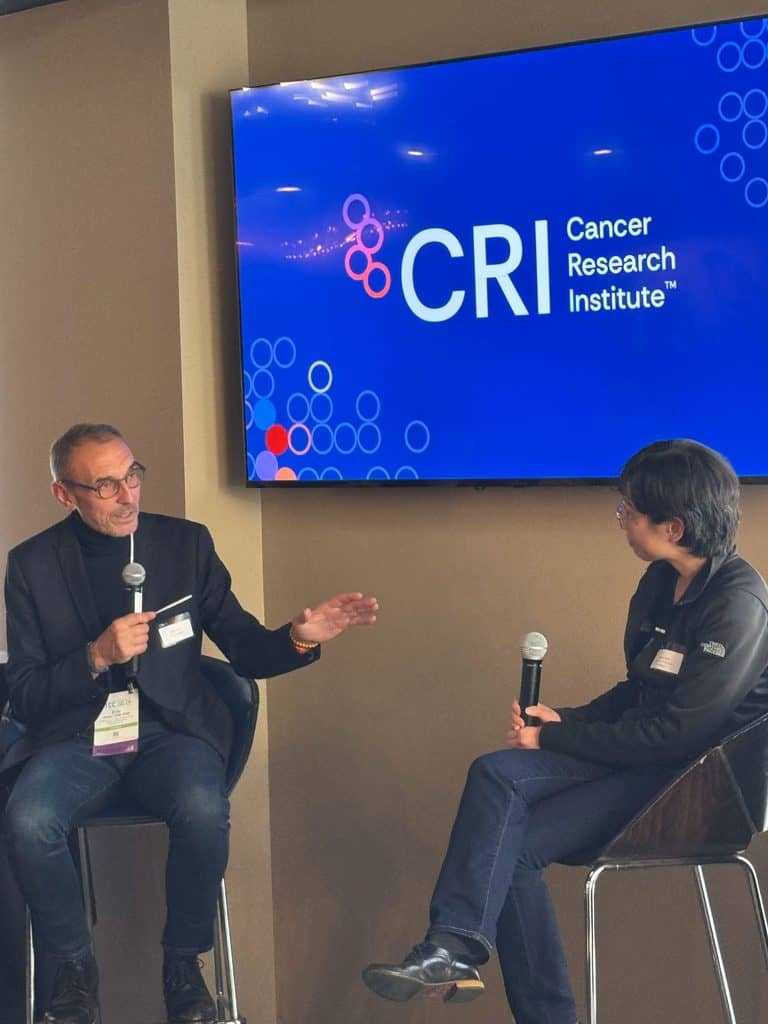
Dr. Vivier urged researchers to use AI “as a tool and not as a replacement for creativity and imagination.” Both scientists emphasized helping trainees use these tools while developing the judgment to question their results.
Audience questions brought the discussion to another challenge: sustaining research as investment priorities shift. Dr. Chen described how researchers turn to government grants, private foundations, and philanthropic donors to keep promising work moving.
“If we believe in the science, we need to, one way or another, find the resources needed to get it into the clinic,” she said.
The exchange underscored the importance of sustained support for research – and the persistence required to turn scientific ideas into potential treatments.
Across the Scientific Program
Beyond the Coley Lecture, the meeting’s featured presentations explored other central questions in cancer immunotherapy.
Ton Schumacher, PhD, delivered a keynote on T-cell recognition of human cancer, while Catherine J. Wu, MD, recipient of the Richard V. Smalley Memorial Award and Lectureship, focused on personalized cancer vaccines.
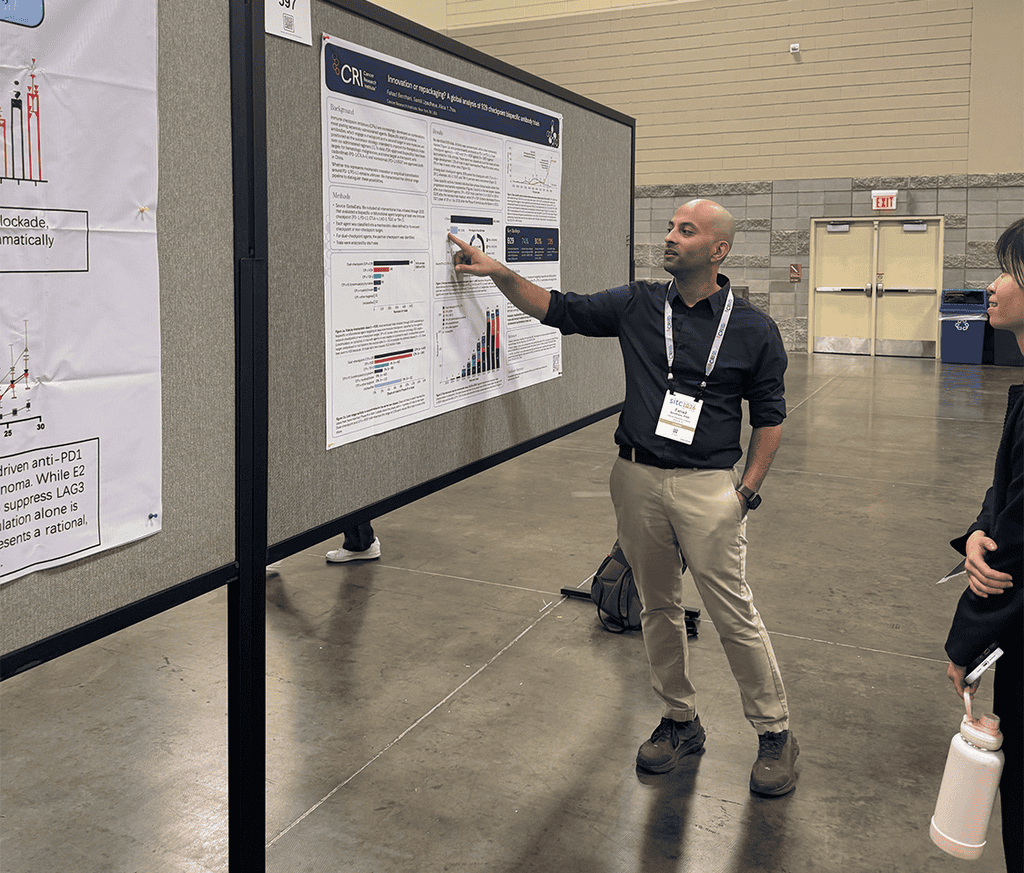
CRI’s own work was also showcased, with Research Scientist Fahad Benthani, PhD, presenting analyses on trends within the immunotherapy clinical trial landscape.
In her Richard V. Smalley Memorial Award lecture, Dr. Wu traced the field’s progress from early attempts to stimulate immunity against cancer to today’s emerging personalized vaccines. Recent phase 3 melanoma results, showing a reduced risk of recurrence when a personalized vaccine was added to checkpoint immunotherapy, provided an encouraging example.
Vinod Balachandran, MD, discussed efforts to expand personalized vaccines for pancreatic cancer, while CRI SAC member Darrell Irvine, PhD, highlighted an alternative approach targeting common KRAS mutations with an off-the-shelf vaccine. Former CRI Fellow Maha Ayyoub, PhD, PharmD, explored another fundamental question: which cancer targets should vaccines train the immune system to recognize?
CRI SAC member Dr. Schumacher’s keynote explored advances in understanding how T cells recognize cancer, including why they can recognize tumors yet remain trapped at their edges.
Spatial biology emerged as a recurring theme, with researchers including Arutha Kulasinghem, PhD, Carlo Bifulco, MD, and CRI SAC member Tina Cascone, PhD, examining how the location and interactions of the immune cells shape treatment responses.
A lively debate between CRI SAC member Antoni Ribas, MD, and CRI Investigator Brian Brown, PhD, moderated by CRI Lloyd J. Old STAR Jennifer Guerriero, PhD, challenged the familiar distinction between immunologically “hot” and “cold tumors.
Even factors beyond the tumor are receiving greater attention: CRI STAR Greg Delgoffe, PhD and CRI SAC member Marcel van den Brink, MD, PhD, explored how diet and metabolism, including their effects on gut bacteria, may influence immune function and treatment outcomes.
Cell therapy is moving beyond simply engineering immune cells to recognize cancer. Researchers are exploring ways to help these cells function better, persist longer, and overcome barriers in solid tumors. CRI STARs Anusha Kalbasi, MD, and Mohammad Rashidian, PhD, discussed complementary approaches to modifying the signals that guide T-cell behavior and providing additional stimulation to sustain CAR-T cell activity.
Whereas fellow CRI STARs Sidi Chen, PhD, and Justin Eyquem, PhD, highlighted advances in genetic engineering, including approaches that could eventually allow immune cells to be modified directly inside the body.
Together, these efforts reflect a growing recognition that improving cell therapy will likely require multiple strategies working together rather than a single solution.
Voices of the CRI Community
SITC also offered an opportunity to hear directly from scientists about their research and the support that helps them pursue it.
“The discoveries we make in the lab don’t get to the patients tomorrow. It’s years, decades, until we can really translate what we’re seeing in the lab to treatments for the patients,” said Luiz Geraldo, MD, PhD, an inaugural CRI IGNITE Fellow. “This support is essential to guarantee that the next generation of scientists ensure things are moving forwards and not backwards.”
Those experiences can show what funding makes possible long before a treatment reaches patients: the freedom to investigate an unexpected result, develop a new approach, or build the evidence needed to move an idea toward clinical testing.
“CRI allowed us to build this technology when it was completely nascent,” said Brian Brown, PhD, Technology Impact Awardee. “CRI took a chance that we would be able to do this, we did it, and now it’s grown into an entire field where lots of people are developing technologies that kind of utilize this concept that we first developed through our CRI funding.”
It’s Not SITC Without the CheckPoints!
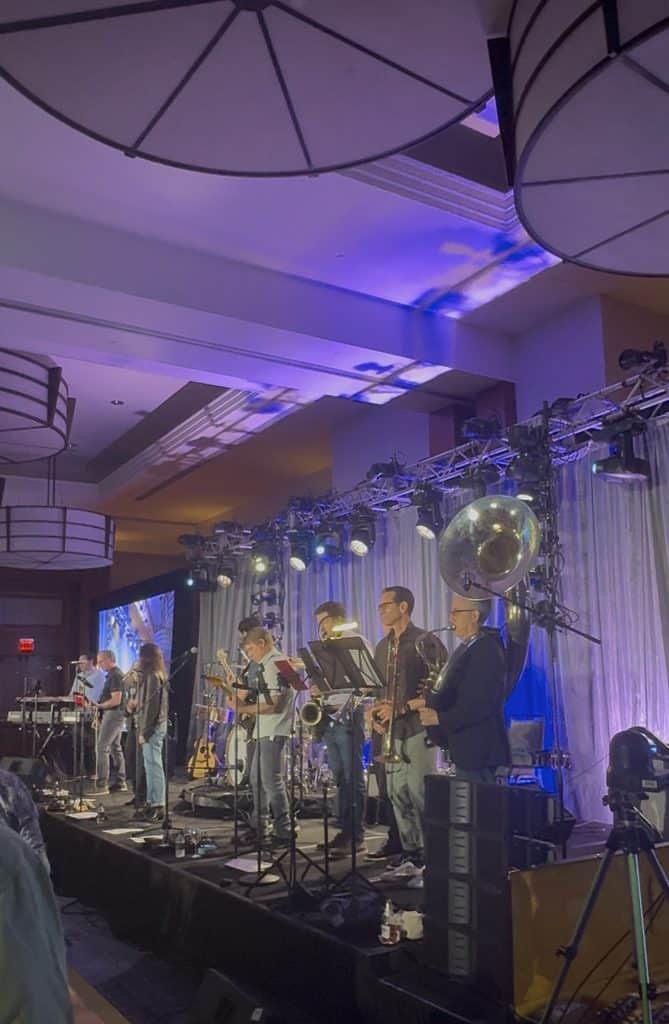
Wrapping up Saturday night, SITC’s house band, the CheckPoints took to the stage for a few hours of music and dancing. Comprised entirely of SITC members and luminaries in their field, the CheckPoints are a staple of the annual meeting.
Looking Ahead
As the 41st Annual SITC meeting wrapped, it became clear that the next advances in cancer immunotherapy will depend on understanding immune biology more deeply, developing approaches that address the limits of existing treatments, and testing new ideas carefully.
For CRI, supporting that progress means investing in scientists with the curiosity to ask new questions and the freedom to follow the evidence.
“CRI gives us full liberty to explore the craziest ideas that no one else would fund,” said 2026 Lloyd J. Old STAR, Justin Eyquem, PhD. “It’s often coming from these disruptive ideas that we develop new categories of drugs.”
The goal behind that work remains the same: helping more people benefit from the immune system’s ability to fight cancer.