

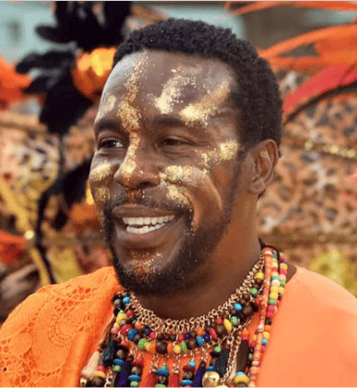
Oswald Peterson’s journey from a devastating stage 4 lung cancer diagnosis to a vibrant, dance-filled life is a powerful testament to resilience, community, and the promise of immunotherapy. Today, cancer-free, he greets every sunrise, every laugh, and every Carnival celebration as a reminder that hope and science can transform even the darkest moments into new beginnings.
Facing a Stage 4 Lung Cancer Diagnosis
Oswald Peterson’s life has always moved to the rhythm of dance, but nothing could have prepared him for the shocking steps life asked him to take in early 2017. After years marked by personal loss, he rang in the new year determined to reclaim joy — only to wake up on January 1 struggling to breathe. The diagnosis that followed was devastating: stage 4 lung cancer so advanced that even standard treatments posed life-threatening risks.
As he lay in a hospital bed, facing a grim prognosis, he found himself quietly planning his own funeral.
Discovering Immunotherapy
But just as the world felt like it was dimming, a spark of hope appeared in the form of immunotherapy. Oswald’s medical team introduced him to KeytrudaⓇ (pembrolizumab), offering not a miracle cure, but the precious possibility of more time.

When you’re on your deathbed, you really start realizing the important things in life. And one of those things that you really start to value is time
That possibility reignited something powerful in Oswald — his will to fight and to dance again.
Within months of his initial treatment, his symptoms vanished. The cancer disappeared, and by July 2017, Oswald was completely cancer-free.
Celebrating Every Day
Today, Oswald lives with a joy that radiates through everything he does. Simple moments — working, laughing with friends, watching the sun rise — feel like gifts. And one of his greatest joys is returning to Trinidad’s famed Carnival, a celebration he once feared he’d never see again. Now, he dances through it as a living symbol of resilience, science, and second chances.
Through it all, Oswald never forgets the support that carried him. His friends became his village — spending nights at the hospital, caring for him through recovery, and lifting his spirit when he needed it most.
“It was really special to know that there are people in your life who will step up when you truly need them.”
Their love, combined with the power of immunotherapy, brought him from the edge of despair back into a life bursting with possibility.
Encouraging Others
To anyone facing cancer, Oswald shares a message filled with strength and conviction: stay involved, stay hopeful, and don’t give up.
“You have to be actively involved — not only in your care and treatment, but in your mood and attitude. You cannot give up.”
His story stands as a vibrant reminder that breakthroughs in cancer care are opening doors to new tomorrows every single day.
Questions and Answers
How and when did you first learn you had cancer?
On New Year’s Day 2017, I could barely walk. It took everything I had just to stand up. Looking back now, I realize that there were a lot of things that were getting more difficult for me to do leading up to January 1, like walking up steps and carrying things.
I went to urgent care where they did an x-ray. They thought I had pneumonia or COPD because I was a smoker at the time. They gave me some antibiotics and sent me home.
Seven days later, I hadn’t gotten any better, so I called a doctor at CUIMC and she told me to come in. When I arrived, she sent me to the emergency room to have some tests done. They decided they were going to keep me because they weren’t sure what it was. Cancer hadn’t even come up yet.
After three and a half weeks, they took a biopsy of my lung and about a week later they confirmed it was not only cancer, but a very advanced form of it. I had cancerous nodules on my chest that spread to my spine. I had stage 4 lung cancer.
How did you learn about immunotherapy and why did you decide to do it?
While I was at CUIMC, a doctor walked in one day and said there was a new treatment for which I was an extremely good candidate. It had just come out of the experimental stages, and they were using it for patients that present high levels of the PD-L1 biomarker. Mine was very high.
So, when you’re lying there with oxygen in your nose and an IV on your arm, you’re open to all the options. I said, “Fine. We’ll do it.”
I went home for about two days, and then came back to the hospital for my first dose of the immunotherapy. Almost immediately I felt different. I don’t know if I want to say I started feeling better, but I felt different.
What was treatment like? Did you have any side effects?
I went back in to CUIMC every three weeks for my treatment. By my second treatment, I had already started to put weight back on. My skin was looking great, I was going to the gym, I had my energy back, and my appetite was good. It was really a quick turnaround.
I went from not being able to walk across a room to being able to be on the elliptical for an hour. You go into immunotherapy thinking you’re going to have some good days and some bad days. I’ve had a lot of great, great days.
Are there things that surprise you about the cancer experience?
When I got diagnosed with stage 4 lung cancer, I was in a place where I was willing to try anything. Immunotherapy saved my life.
Immunotherapy gave me a second chance and I wanted it. I hadn’t felt like that in a very long time. It was the immunotherapy, the way it reacted, and the confidence of the doctors and of course, my friends, that made me want to live again. It made me feel like, “you know what? You’re still here.”
What would you want another patient to know about immunotherapy or about participating in a clinical trial?
My number one advice is to find out as much as you can about as much as you can. I didn’t know about immunotherapy. Most people out there think chemo and radiation when they hear cancer. You need to be open to the newness of immunotherapy. We’re so used to having medicines do the healing as opposed to having medicines reprogram our bodies.
Sometimes, when you feel that your body is already ill, you might not feel your body has that fight left in it. But immunotherapy helps you fight that fight because it teaches your body to fight.