
We should double down on investing in science.
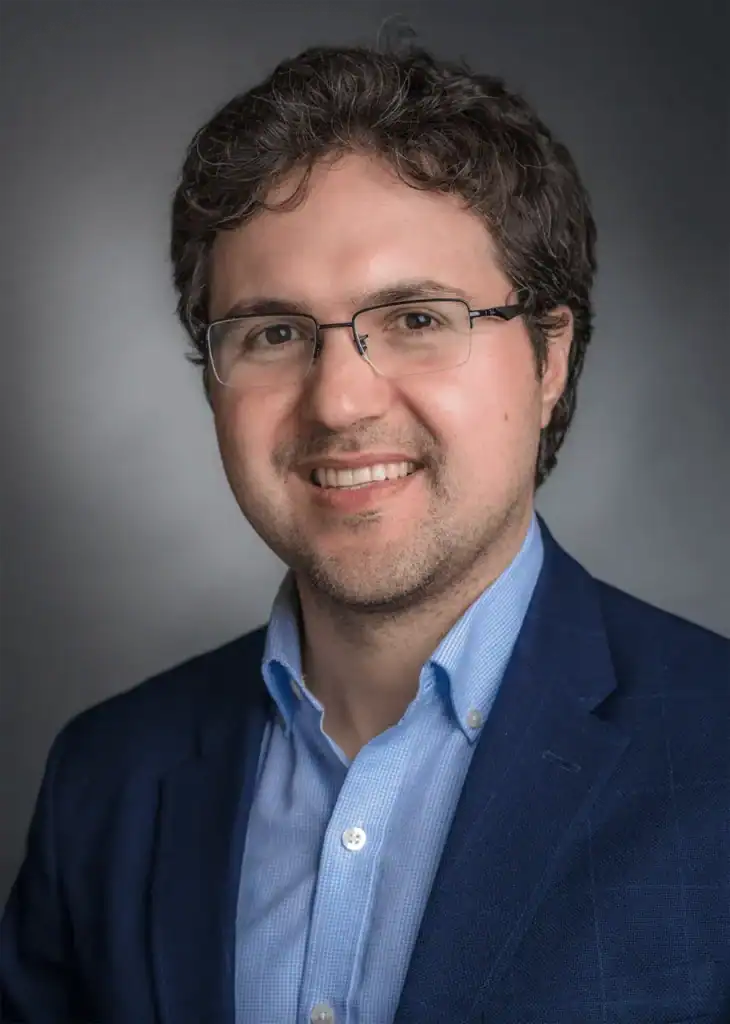
For Mohammad Rashidian, PhD, a commitment to cancer immunotherapy took shape with help from the Cancer Research Institute (CRI).
As a CRI Irvington Postdoctoral Fellow, he found more than support for his research. Through CRI retreats and conferences, he saw how discoveries about the immune system could lead to new ways to help patients — a connection that helped define the direction of his career.
“One of the reasons that I am now dedicating my whole career to immunotherapy was absolutely CRI,” he said.
Today, Dr. Rashidian is a faculty member at Dana-Farber Cancer Institute and an associate professor at Harvard Medical School. As a newly awarded CRI Lloyd J. Old STAR, he is exploring a question with major implications for cancer treatment: how can we help cancer-fighting immune cells stay effective over time?
Helping T Cells Sustain Their Attack
T cells are immune cells capable of recognizing and killing cancer cells. But their ability to keep attacking can diminish, limiting the effectiveness of treatments that depend on them.
This state, known as T-cell exhaustion, is a major challenge in cancer immunotherapy, particularly against solid tumors.
“We’re trying to overcome that problem by helping those T cells not get exhausted and continue killing the tumor cells,” Dr. Rashidian said.
His laboratory has discovered a signaling system inside T cells that appears to help control whether they can sustain their response or become exhausted. Early findings suggest this signaling hub coordinates several processes that help the cells survive longer and maintain their ability to act against cancer.
With STAR support, Dr. Rashidian will investigate how this system works and why it appears to help T cells resist exhaustion in the challenging environment of solid tumors.
The long-term goal is to turn that understanding into new immunotherapies capable of producing more durable responses. He hopes this work could eventually inform treatments for cancers such as sarcoma, pancreatic cancer, ovarian cancer, and triple-negative breast cancer.
Getting there begins with understanding the biology.
A New Pathway Worth Exploring
STAR stands for Scientists Taking Risks. Investigating an unfamiliar biological pathway means pursuing questions whose answers are still uncertain.
“It’s a totally new pathway that we’ve discovered,” Dr. Rashidian said.
His team needs to uncover how that pathway functions and determine how its activity might be used to develop new treatments. The potential is substantial, but so is the scientific work needed to understand it.
That uncertainty can make early research difficult to fund.
For Dr. Rashidian, CRI’s investment provides an opportunity to build the evidence that can move an ambitious idea forward. As the science becomes better established, that foundation could also help attract additional support to advance the work toward patients.
The STAR program provides $1.25 million in flexible funding over five years, supporting scientists based on the promise of their overall research. It gives investigators like Dr. Rashidian room to follow a discovery as their understanding develops.
Investing in a Scientist — and What Comes Next
Dr. Rashidian’s love of science began in high school. Today, that curiosity, combined with “the passion of helping our patients,” keeps him motivated every day.
He also sees research funding as an investment whose impact can extend beyond any individual experiment.
Support for a laboratory can create opportunities to recruit postdoctoral researchers, train graduate students, and bring research technicians onto a team. Discoveries made in those laboratories can eventually lead to new collaborations, biotechnology companies, and treatments.
“I think the research ecosystem has contributed so much to the economy,” said Dr. Rashidian. “Science is not limited to universities; it actually feeds industry. It creates the startups. It contributes so much to the economy.”
Without that support, he worries that promising ideas — and the scientists pursuing them — could be lost.
“We may lose very talented scientists who could become leaders in the field and make impactful science,” he said.
His own experience offers a reason to keep investing. An early CRI fellowship helped strengthen his scientific vision and his commitment to immunotherapy. Now, STAR support is helping him pursue a discovery that could shape the next stage of that work.
For Dr. Rashidian, the case for supporting science reaches from the people doing the research to the patients he hopes will one day benefit.