
Immunotherapy has revolutionized cancer treatment, yet many patients still do not achieve lasting benefit. Among the key players in anti-tumor immunity, CD4 T cells act as essential coordinators, helping other immune cells mount effective and sustained responses. A unique subset known as “stem-like” CD4 T cells has the potential to drive long-term immunity by continuously generating new effector cells. However, in cancer, these same cells often take a wrong turn—producing suppressive cells that weaken immune attack rather than strengthen it. Understanding what determines whether stem-like CD4 T cells become helpers or suppressors could be the key to making immunotherapy more consistently effective.
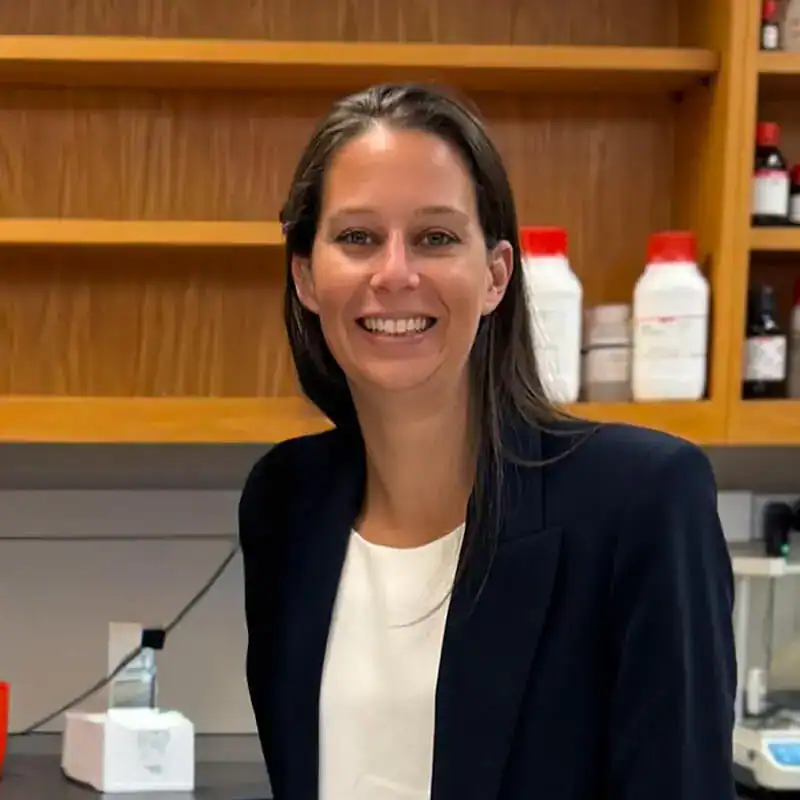
Dr. Maria Cardenas Conti’s research seeks to uncover the molecular and cellular factors that guide stem-like CD4 T cell fate in cancer. Using cutting-edge genomic and immunologic approaches, she will identify the transcriptional regulators, inhibitory receptors, and cellular partners that control whether these cells sustain or suppress anti-tumor immunity. By defining how stem-like CD4 T cells are maintained and how they can be redirected toward beneficial immune functions, her work could uncover new strategies to improve the durability and breadth of immunotherapy responses across cancer types.
Dr. Cardenas Conti is an emerging leader in cancer immunology whose research has illuminated new pathways of T cell regulation and anti-tumor immunity. Her cross-disciplinary expertise—from T cell biology and bioinformatics to translational cancer models—positions her to redefine how the immune system can be guided to achieve lasting cancer control and long-term patient benefit.
Sponsor
E. John Wherry, PhD
Projects and Grants
Intrinsic and extrinsic regulation of stem-like CD4 T cell differentiation in cancer