
The immune system must constantly balance attack and restraint—fighting infections and cancer while avoiding the harmful inflammation that leads to autoimmune disease. Regulatory T cells (Tregs) are central to maintaining this balance, acting as the body’s immune “brakes.” One of the key molecules guiding their function is interleukin-2 (IL-2), a signaling protein that also fuels the activity of other immune cells. Yet how Tregs interpret IL-2 signals to adapt their behavior in different inflammatory environments remains poorly understood.
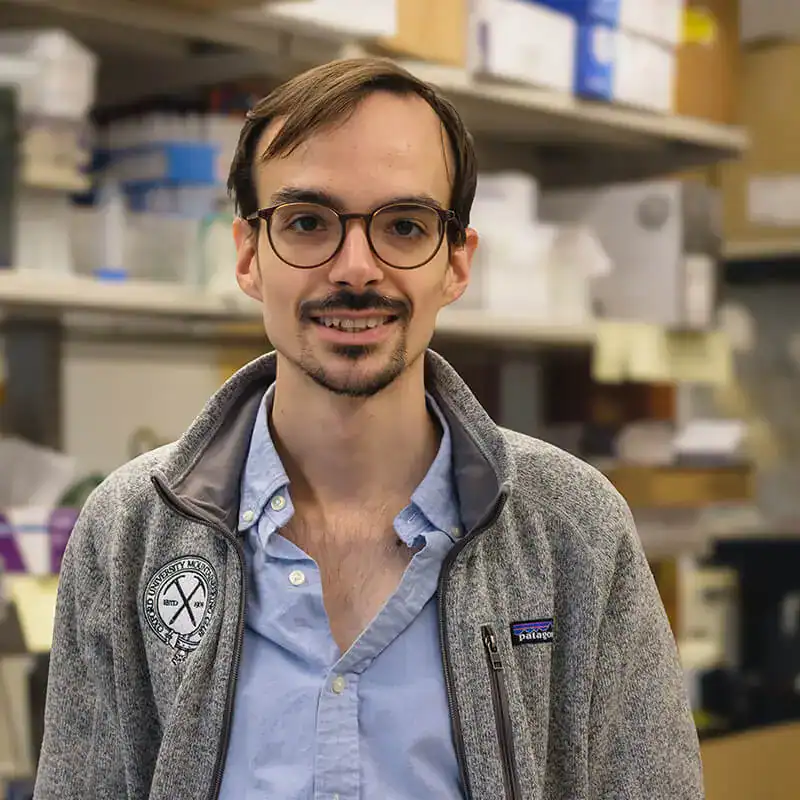
Dr. Lion Uhl’s project explores how immune cells decide when to activate or hold back, focusing on the partnership between two proteins inside Tregs—Foxp3, which defines their identity, and STAT5, which responds to IL-2 signals. He is investigating how Foxp3 fine-tunes STAT5’s activity, helping Tregs adjust their response to maintain immune balance under stress. By uncovering how this molecular dialogue shapes Treg function, Dr. Uhl’s research could reveal new ways to strengthen immune control in cancer or restore it when it fails in autoimmune disease.
Dr. Uhl brings an interdisciplinary background spanning immunology, cytokine signaling, and infection biology. His prior work uncovered mechanisms that preserve diversity within CD8 T cell responses and revealed new ways that cytokine communication shapes immune memory. Building on this foundation, he now aims to decode how IL-2 and Foxp3 cooperate to direct immune tolerance—knowledge that could ultimately guide the development of more precise cellular immunotherapies and targeted treatments for immune-related diseases.
Sponsor
Alexander Rudensky PhD
Projects and Grants
Molecular mechanisms of fine-tuning of the regulatory T cell transcriptional and functional program by interleukin-2