
Contributing author: Rob Malone

Victoria “Vicky” Ann Michelis did not want to be defined by ovarian cancer. She wanted to be remembered for how she lived: championing the underdog, caring deeply for the people around her, and speaking her mind without hesitation.
Today, one of her best friends, Rob Malone, is honoring the person she was by carrying her generosity forward. Through the Victoria Ann Michelis Fund, he is supporting causes that mattered to Vicky — including research aimed at creating more options for people facing cancers like she did.
What is Ovarian Cancer?
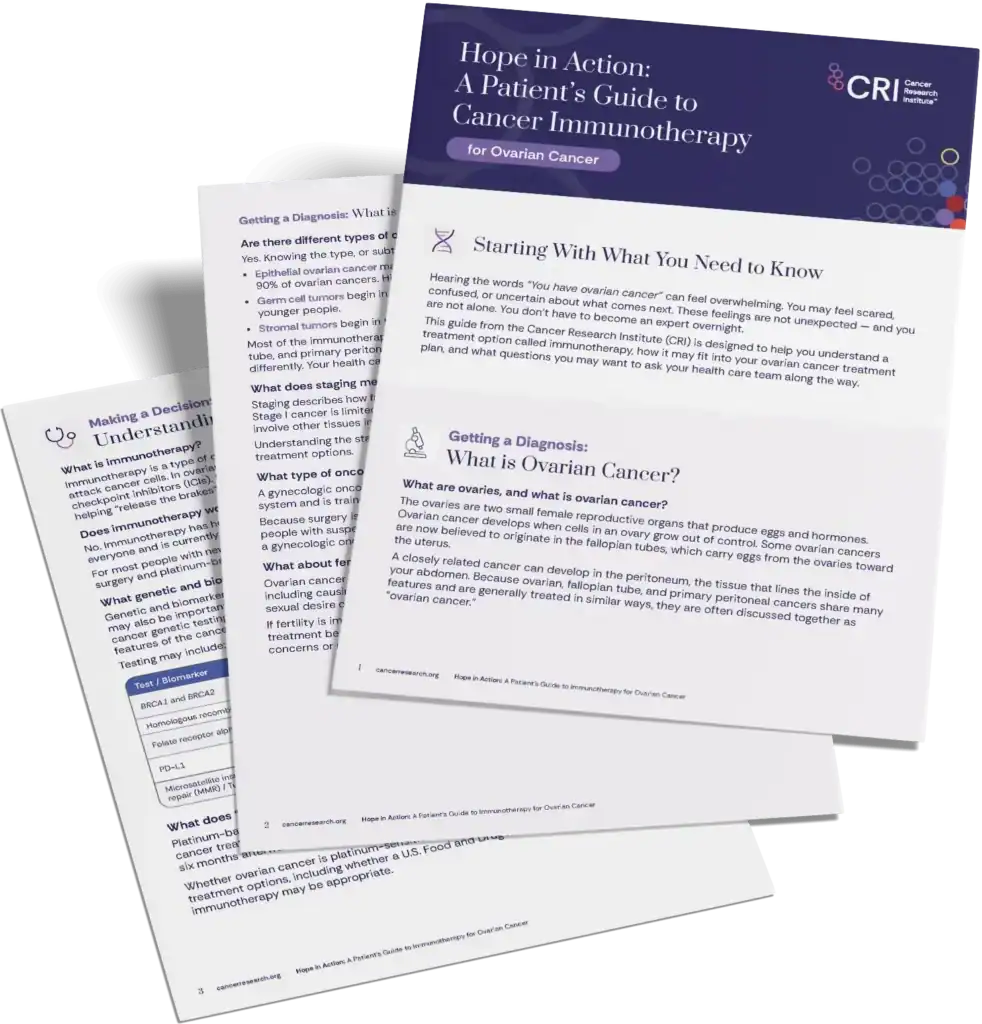
The ovaries are two small female reproductive organs that produce eggs and hormones. Ovarian cancer develops when cells in an ovary grow out of control. Researchers now believe that some ovarian cancers originate in the fallopian tubes, the narrow tubes that carry eggs from the ovaries toward the uterus. A closely related cancer can also develop in the peritoneum, the tissue lining the inside of the abdomen.
Ovarian cancer is a leading cause of cancer death among women. In 2024, approximately 331,000 women worldwide were diagnosed with ovarian cancer, and more than 200,000 died from the disease. In the United States, an estimated 21,010 new cases and 12,450 deaths are expected in 2026.

A Champion for the Underdog
Vicky was known for her tenacity and strongly held opinions. Deeply dedicated to the people closest to her, she also had a particular instinct for standing beside those who needed help most.
“Through the years, she worked at many different jobs, all of them oriented around interacting with people,” says Rob. “And one thing that was characteristic of every one of her interactions is, if you were a bigwig and too impressed with yourself, she had very little regard for you. If you were a small person who was struggling, she was all about you.”
That impulse to empathize with and advocate for the underdog was a defining thread throughout Vicky’s life.
After experiencing symptoms of hypercalcemia, or too much calcium in the blood, Vicky was diagnosed with small cell carcinoma of the ovary, hypercalcemic type — a very rare and aggressive form of ovarian cancer.
Rob recalls that Vicky approached the diagnosis with remarkable objectivity. “The researcher came out,” he says. She investigated her options, sought out doctors, and became a determined advocate for herself throughout treatment.
That did not mean she was untouched by the weight of the diagnosis. Rob remembers one phone call in particular, when the weight of what was happening seemed to settle in.
“They said the word ‘cancer,’ and they were talking about me,” Vicky told him.
Treatment, Remission, and Giving Back
After several grueling years of surgery and chemotherapy, Vicky was given the “thumbs up.” Against the odds, she and Rob believed she had beaten the cancer.
Her experience, however, had shown her how difficult ovarian cancer can be to recognize. Many people do not receive a diagnosis until the disease has reached an advanced stage, in part because its symptoms can be subtle and easily mistaken for other conditions.
Vicky became passionate about raising awareness. She started a small nonprofit focused on helping more people understand ovarian cancer and recognize its possible symptoms. Rob describes the organization simply as “her way of giving back.”
In 2017, Vicky’s cancer returned.
“She tried everything she could try,” Rob recalls. “She looked for trials, and she went so aggressive with the treatments that it just weakened and harmed her.”
Vicky passed in 2020. But the values that guided her life — generosity, compassion, and a fierce commitment to helping others — did not end with her death.
The Victoria Ann Michelis Fund
Vicky left her estate in Rob’s care with the intention that most of it would be placed into a charitable fund, after some very specific gifts were made to the people closest to her. Rob took that responsibility seriously.
Named in her honor, the Victoria Ann Michelis Fund supports smaller US-based nonprofit organizations working in areas Vicky cared deeply about: underserved children; cancer research and patient care; people experiencing hunger, homelessness, or other vulnerabilities; and animal welfare.
Through the fund, Rob has generously supported the Cancer Research Institute (CRI) and its pursuit of bold ideas that could create new possibilities for people with cancer.

“Vicky was frustrated that she kept being put down the same old chemotherapy paths for treatment, that there wasn’t something innovative or different that could have been done,” Rob says of his decision to support CRI. “And that’s why I think CRI would appeal to her, because you’re pursuing the other options.”
One researcher supported by the Victoria Ann Michelis Fund is CRI Irvington Postdoctoral Fellow Hyung Jun Kim, PhD. Dr. Kim is investigating how to reengineer macrophages, a type of immune cell, to make them more effective against solid tumors.
Solid tumors, including ovarian tumors, have proved particularly challenging for immunotherapy. The environment surrounding these tumors can suppress immune responses and make it difficult for immune cells to reach and attack cancer. Dr. Kim’s work could help researchers better understand how to overcome those defenses and open new possibilities for treating ovarian and other solid tumors.
Rob has also made a multiyear commitment through the fund to the CRI Discovery Engine, a first-of-its-kind initiative designed to generate standardized, high-quality, AI-ready data that researchers can use across institutions and studies.
Ovarian cancer will be among the Discovery Engine’s areas of focus. By helping scientists more easily compare findings, identify patterns, and build on one another’s work, the initiative aims to accelerate immunotherapy research in difficult-to-treat tumors and, ultimately, help create more options for patients.
Carrying Vicky’s Generosity Forward
Vicky did not want cancer to define her life. It does not define her legacy, either.
Her legacy lives in the people she loved, the causes she championed, and the generosity now extended in her name. Through the Victoria Ann Michelis Fund, the instinct that guided Vicky throughout her life — to stand beside those who needed someone in their corner — continues to reach people and animals she never had the chance to meet.
It also lives in the research working toward a future Vicky wanted but did not have: one in which people with ovarian cancer have more treatment options, more reasons for hope, and more opportunities for time.
Help Advance Cancer Research
Learn how you can support research working toward more treatment options — and more time — for people with cancer.