
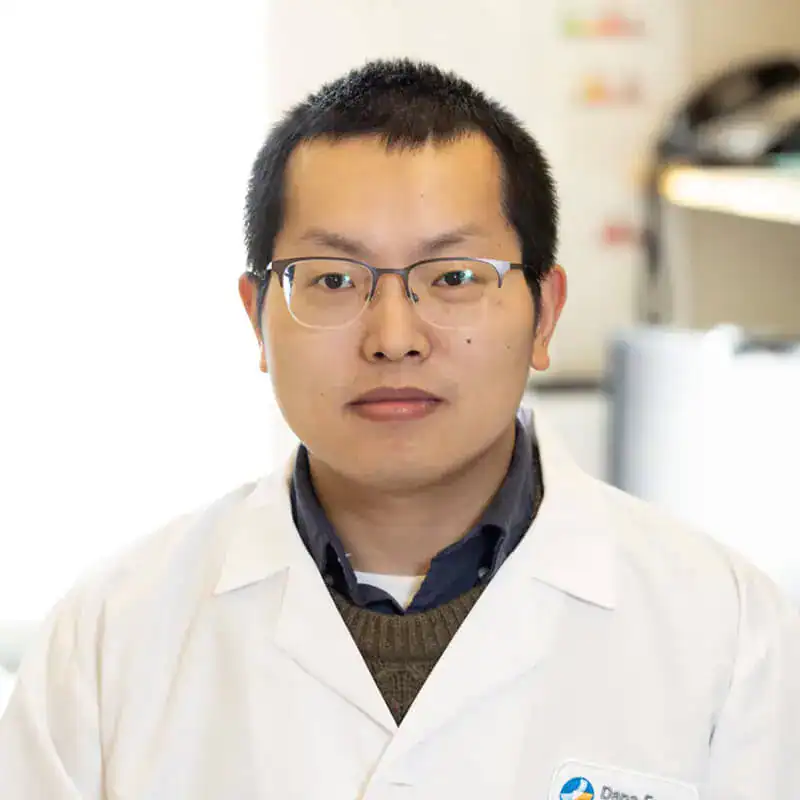
Immune checkpoint therapies have revolutionized cancer treatment by reawakening the body’s immune system to attack tumors. Yet, for most patients, these treatments still fail to produce lasting benefits. Dr. Hao Wang’s research explores an alternative strategy—strengthening special immune hubs that form inside some tumors, known as tertiary lymphoid structures (TLSs). These organized clusters of T cells and B cells act like miniature lymph nodes, coordinating immune attacks against cancer. Tumors that contain TLSs are often more responsive to therapy and linked to improved patient outcomes.
Dr. Wang’s project focuses on a newly identified inhibitory pathway called CD161–CLEC2D, which may suppress immune activity within TLSs. Using an innovative humanized mouse model, he will test whether blocking this pathway can enhance communication between T cells, B cells, and natural killer (NK) cells, boosting the tumor-fighting capacity of TLSs. His studies will also examine how CD161 blockade influences tumor control in models of lung and ovarian cancer, where TLSs naturally arise. This work could uncover a powerful new way to engage the immune system, complementing existing checkpoint therapies and improving outcomes for patients with solid tumors.
Dr. Wang brings a unique combination of expertise in molecular genetics, immunology, and translational cancer research. His previous discoveries revealed new immune checkpoint pathways and led to antibody-based strategies that enhance immune attack against cancer. Building on this foundation, he now aims to develop therapies that not only “release the brakes” on T cells but also reprogram the broader immune ecosystem within tumors—paving the way for more effective and durable cancer immunotherapies.
Sponsor
Kai Wucherpfennig, MD, PhD
Projects and Grants
Modulation of T cell-B cell crosstalk in tertiary lymphoid structures via the CD161-CLEC2D pathway